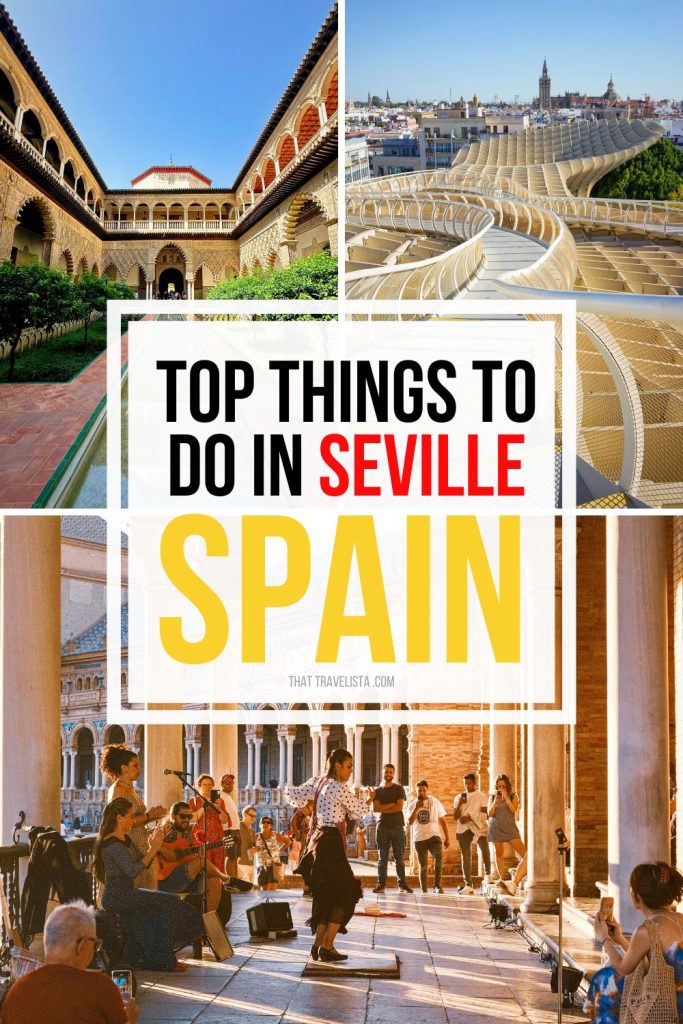
14 Top Attractions and Best Things to Do in Seville, Spain
More typically called by its Spanish name of Sevilla (pronounced seh-VEE-yah), Seville is a must-visit in your lifetime. It’s the capital of Spain’s largest autonomous community, home to the world’s oldest tapas bar, and known for some of the most brutal summers in Europe.
Seville is often left out of the typical one week Spain itinerary. In my opinion, this is purely due to its distance from the more popular spots of Barcelona and Madrid and nothing to do with its worthiness for a top spot on your Spain itinerary. So if you have enough time in Spain, then visiting Seville is an absolute must
So in this post, I’m sharing the main things to do and see in Seville. Ready? Let’s go.
Where to Stay in Seville
If you are traveling on a budget, it would be helpful to stay within walking distance of the train station (Seville-Santa Justa). That way, you can save money on cabs to and from your hotel. If you have a larger budget or someone to split taxi costs with, then consider staying in Seville’s beautiful historic center instead. Whatever you decide, you will be walking distance from most (if not all) attractions!
Where to Stay in Seville
- Hostal Sevilla Santa Justa: Mid-range option within walking distance from the train station, and where I stayed on my first trip to Seville. Don’t let the name confuse you – it’s not a hostel!
- Eurostars Sevilla Boutique: Higher-end option with rooms ranging from doubles to family suites, an outdoor pool, and a rooftop terrace (open Thurs – Sun) offering the most amazing views of Seville’s iconic bell tower.
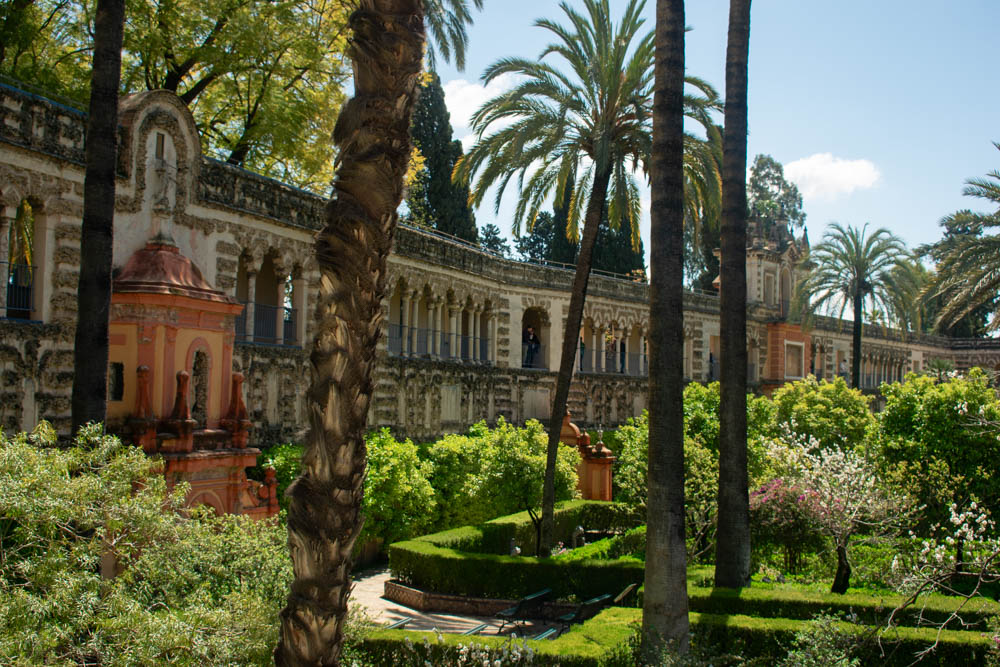
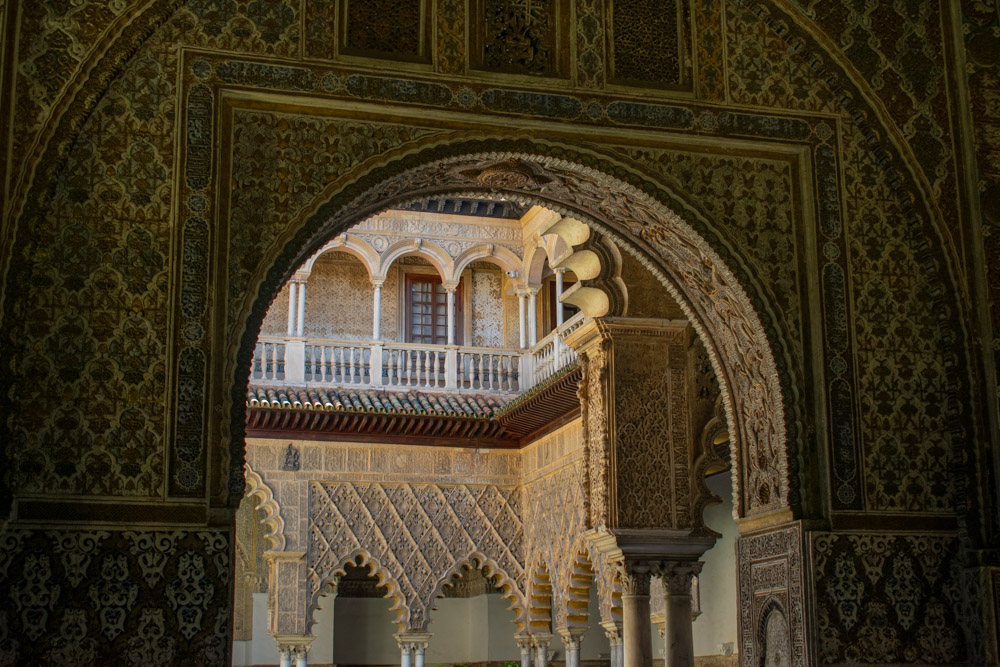
Real Alcázar de Sevilla
This former fortress is where the Moors ruled from while they were in Seville. After reconquering Seville, the Christian monarchs added to it and used it as a royal palace. If you were a Game of Thrones fan, you will probably recognize many different parts of the Alcázar as film sites (especially Dorne!). This post here actually has a full rundown of the spots to look out for during your visit, if you’re interested. General entry tickets will set you back €15.50, and you can also add a tour of the royal rooms for €4.50. Personally, I didn’t feel that the royal rooms tour was super worth it. I found the rest of the Alcázar to have the best parts and would have been happy only visiting that. But I know others have loved it! I think it depends on how many European palace tours you’ve done or if you tend to love or hate royal room tours. Either way, you can buy the tickets online from the official site.
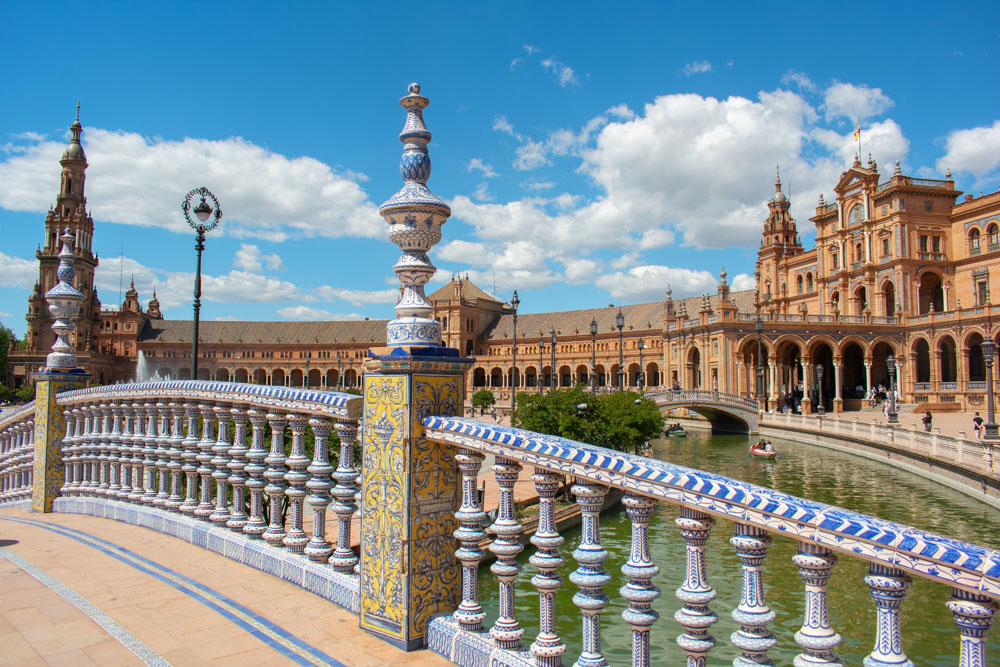
Plaza de España
This tile-adorned public square is the most famous image of Seville. You might even recognize it as a backdrop in some films, like Star Wars: Attack of the Clones. The Plaza de España is located inside the Parque de María Luisa, and its name translates to “Spain Square.” When you visit, it’ll be clear why! Those blocks of titles you see everyone taking pics on? Well each of those displays a tiled-image representing a province of Spain. During your visit to this plaza, you can also rent a boat and row along the plaza’s canal. You might also want to wait around near the two central bridges to see if you catch a flamenco performance!
Parque de María Luisa
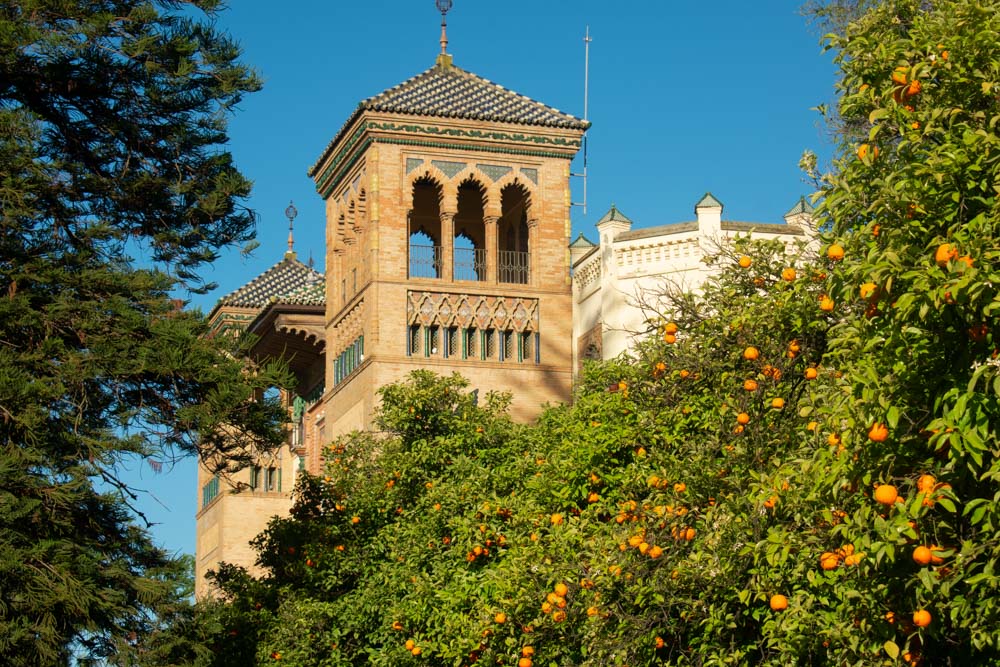
Though this park is most famous for housing the Plaza de España, it deserves some exploring of its own! Parque de María Luisa started of as private gardens of a palace, but today it is public. In it, you’ll find diverse greenery, fountains, and pavilions.
Barrio Santa Cruz
This beautiful neighborhood of narrow alleys and peaceful plazas is where Seville’s Jewish community was once mostly concentrated. It is located just across the main cathedral and not too far from the Alcácazar. It is one of the most beloved areas of central Seville, so take some time to wander its little streets.
Catedral de Sevilla
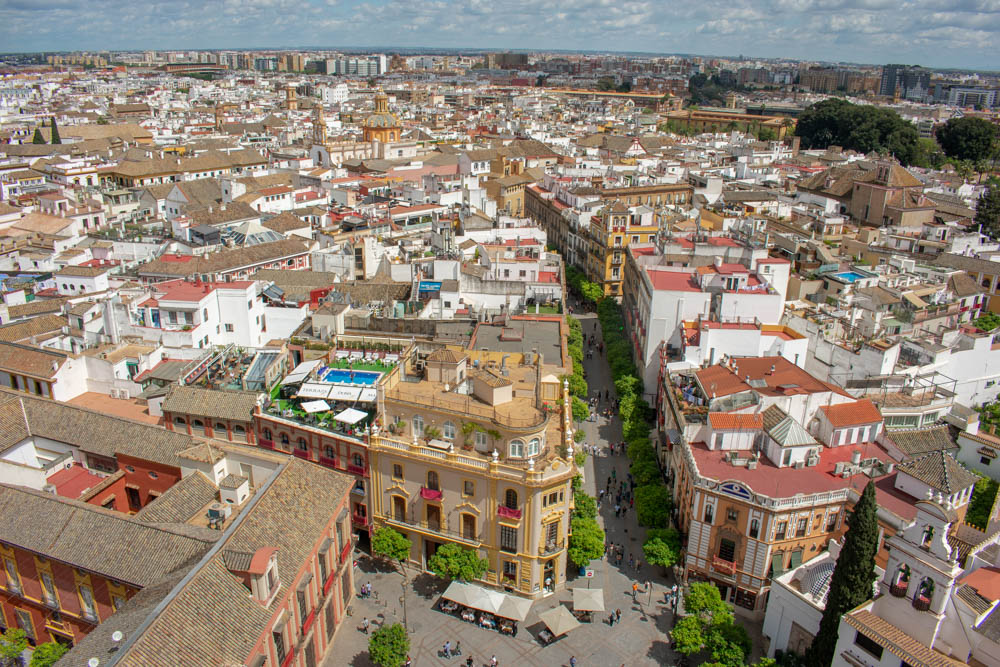
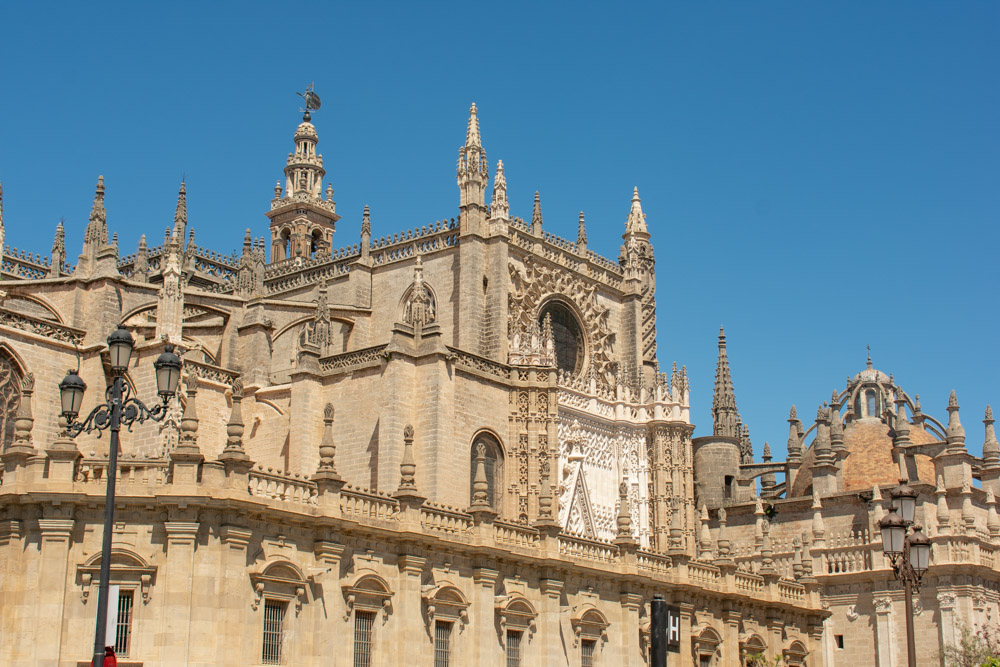
This is the third-largest church in Europe and the largest Gothic church in the world. It is also the final resting place of Cristopher Columbus (and his son, too). The cathedral was built over a destroyed mosque, but the courtyard of orange trees and the mosque’s minaret still remain, giving it a super unique, blended architecture look. The minaret was turned into a bell tower, which tourists can climb up to enjoy panoramic views over Seville. There is no elevator to get up to the bell tower, so you will have to walk up the ramps, built instead of steps so that horses could go up it. Tickets to the cathedral and bell tower are €13 and can be purchased online from the official site. Tickets cost €1 more if purchased in person. You might also want to consider the €20 tickets for a guided tour on the cathedral rooftop! You can also purchase these on the official site.
Plaza de Toros (de la Real Maestranza de Caballería de Sevilla)
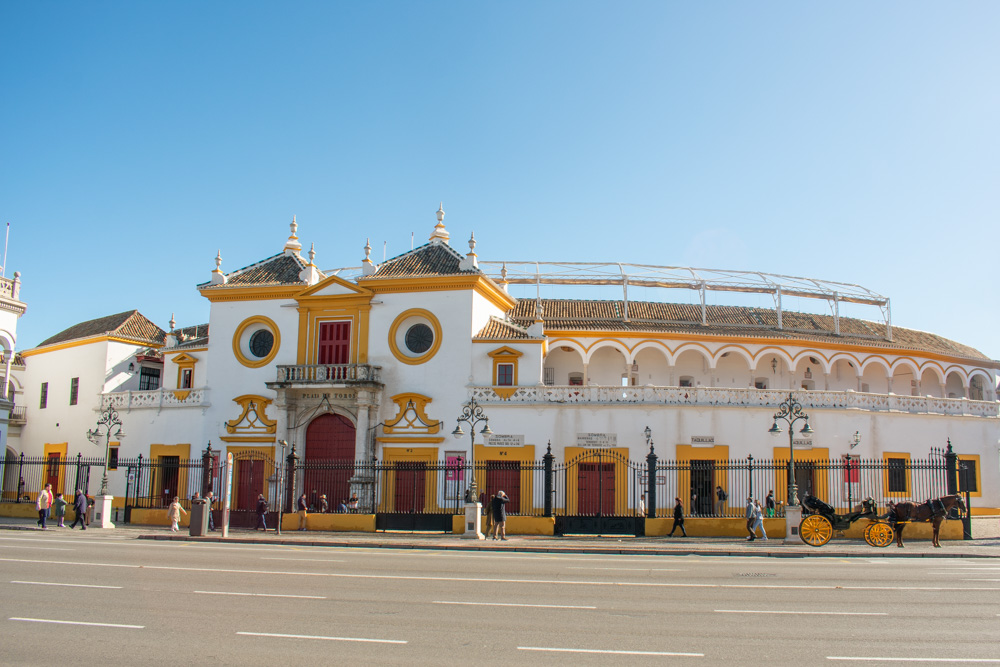
This bullring is the largest and most significant in Spain. Strolling around the outside and looking inside the ring whenever there was an opening was sufficient for me. But if you want to enter the bullring without attending an event, you can join a tour. You can purchase tickets for €12 online from the official site or also in person.
Barrio de Triana
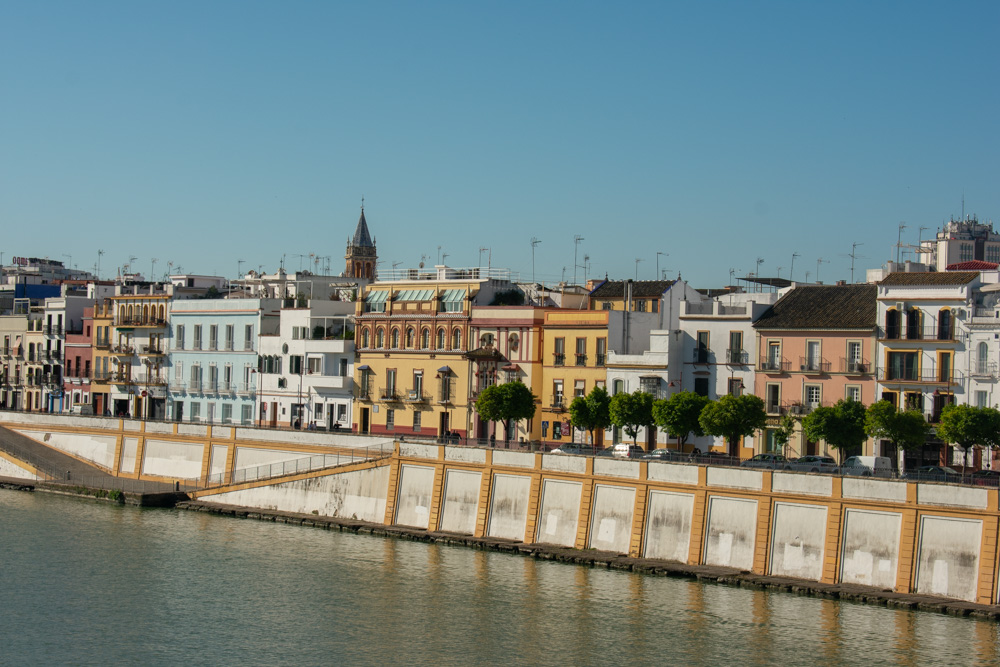
This historic and lively neighborhood in Seville sits across the river from the main part of the city center. One of the main attractions here is the Mercado de Triana. This is a cute, indoor food market with a lot less-touristy feel than similar popular markets in Barcelona or Madrid. The market is next door to the remains of what once was Castillo de San Jorge.
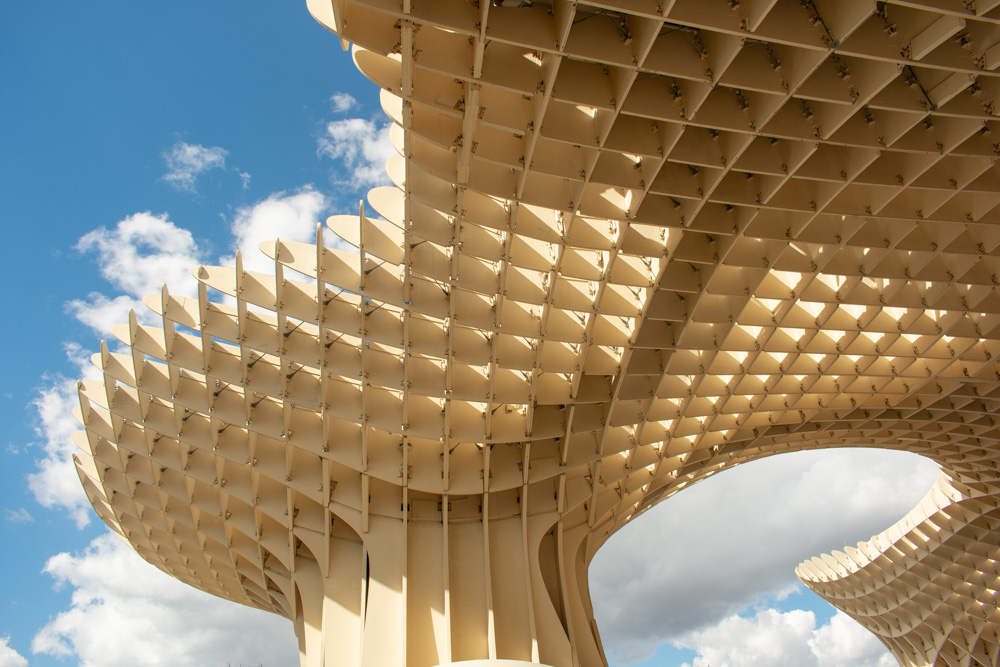
Setas de Sevilla
Also called the Metropol Parasol, this is apparently the largest wooden structure in the world. It was built in a way that resembles mushrooms (called setas in Spanish, hence the name). From the walkways up top, you’ll get one of the best viewpoints in Seville. You can get a discount by booking in advance online at the official site, where general entry tickets are €16. Even if you don’t decide to purchase a ticket to go up, the building is pretty cool from the bottom and warrants a visit.
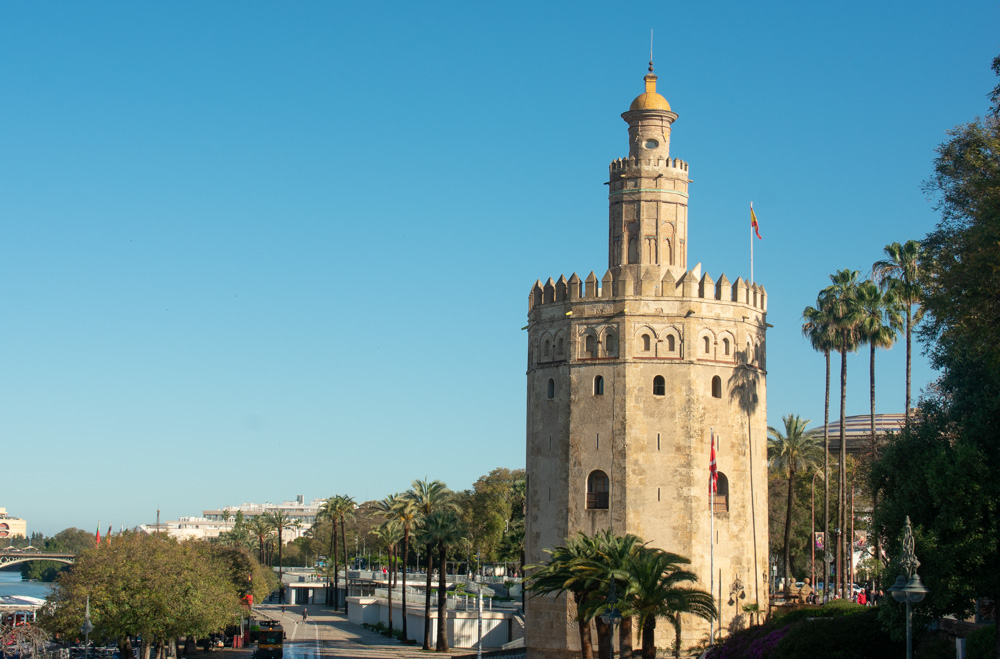
Torre del Oro
This was originally part of Seville’s Moorish walls, and the name of this former military watchtower translates into “Tower of Gold.” The tower sits along the Guadalquivir River and marked the starting and ending point for Spanish ships bringing spoils from the Americas to Spain. Today, it hosts the Museo Naval de Sevilla inside. There, you can learn about Spain’s naval history and enjoy the panoramic terrace. Entry is free, but a €3 donation is requested.
Calle de las Sierpes
This is central Seville’s main shopping street. It runs between Plaza de San Francisco and Calle Campana. You can enjoy a slow stroll up this pedestrian zone, popping in and out of the boutique shops that are geared toward tourists and locals alike.
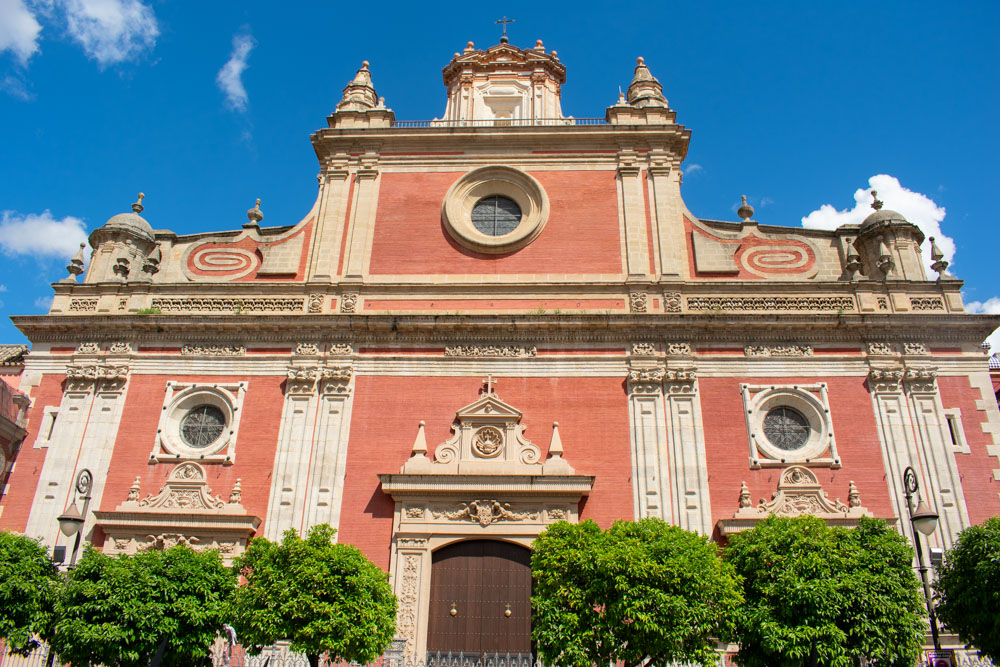
Iglesia Colegial del Salvador
Entry into this beautifully salmon-colored church is free with your ticket to the Seville Cathedral! It was Holy Week during my visit, so the church had limited visiting hours, and there was a loooong line of locals waiting to enter. So I didn’t manage to pop in. But if you do, I’d love to hear how you liked it!
Museo de Bellas Artes
Originally a convent, Seville’s Museum of Fine Arts is now home to some of the most important Spanish paintings. It is considered one of the best collections in Spain after the Prado Museum in Madrid. If you enter, you’ll enjoy works by the likes of Velázquez, Murillo, and Zurbarán. Entry is €1.50.
Museo del Baile Flamenco
The famous Spanish dance originated in southern Spain, and those interested can view some of Andalusia’s best flamenco at a show here. Shows are nightly, and you can book your tickets online at the official site.
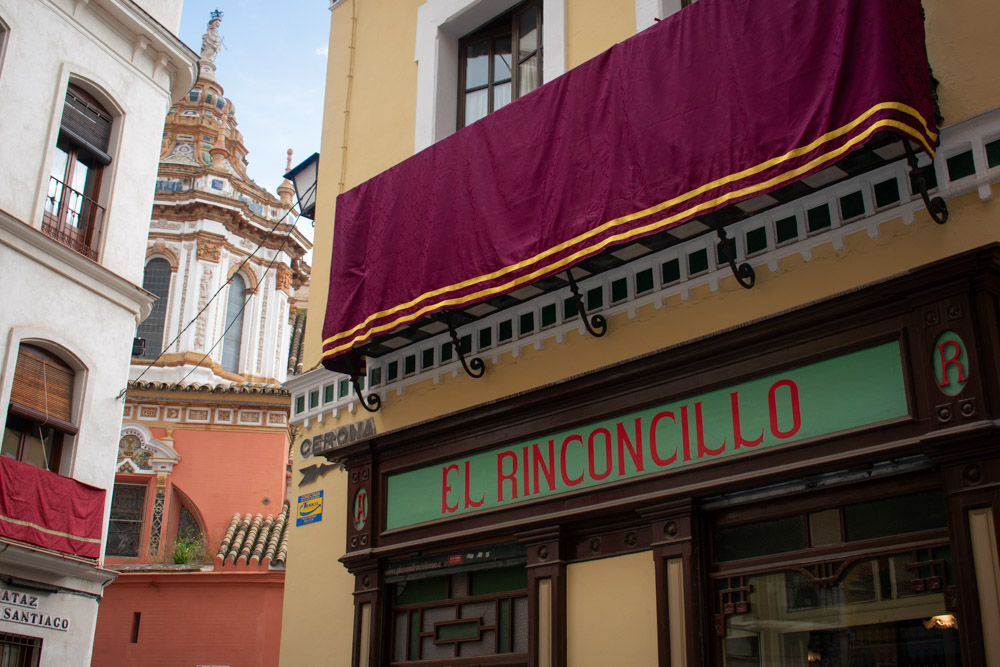
El Rinconcillo
This is known as the world’s oldest tapas bar! Experience a bit of history by booking a seat in advance on the official site. It gets quite crowded!
FREE 10 Day Spain Itinerary E-Book
Will you be exploring more than just Seville while traveling through Spain? If so, skim through my ridiculously detailed Spain itinerary for ten days. I made it especially with first-time visitors to the country in mind, but it’s honestly lovely for anyone who simply has a lot to see in a little time. I’ve also made a printable, condensed version of that ten day itinerary with every important detail you’ll need once on the ground. Just download the PDF, print it double-sided (so three pages total), and you’re good to go for your trip. It even has a map! Click below to get it emailed to you.
What Do You Think?
Are you planning a trip to Seville? Let me know any questions you still have in the comments below, and I’ll get back to you. Have you already been to Seville? Let me know of any hidden gems I missed, so that I can know for my next return!
Save this Article on Pinterest to Return to Later