
Italy 10 Day Itinerary: Rome, Amalfi Coast, Florence, and Venice
There is so much to see and do in Italy that it’s honestly difficult to plan an itinerary for a limited amount of time. This is doubly true if it is your first trip to Italy! So, in an effort to take the guesswork out of it for others, I’ve put together this epic Italy itinerary for ten glorious days in Italy, now that I’ve visited multiple times. This Italy itinerary hits all the main sights – Rome, Florence, and Venice – plus the ever so dreamy Amalfi Coast and more. That way, you can come back home seeing more than the bare minimum!
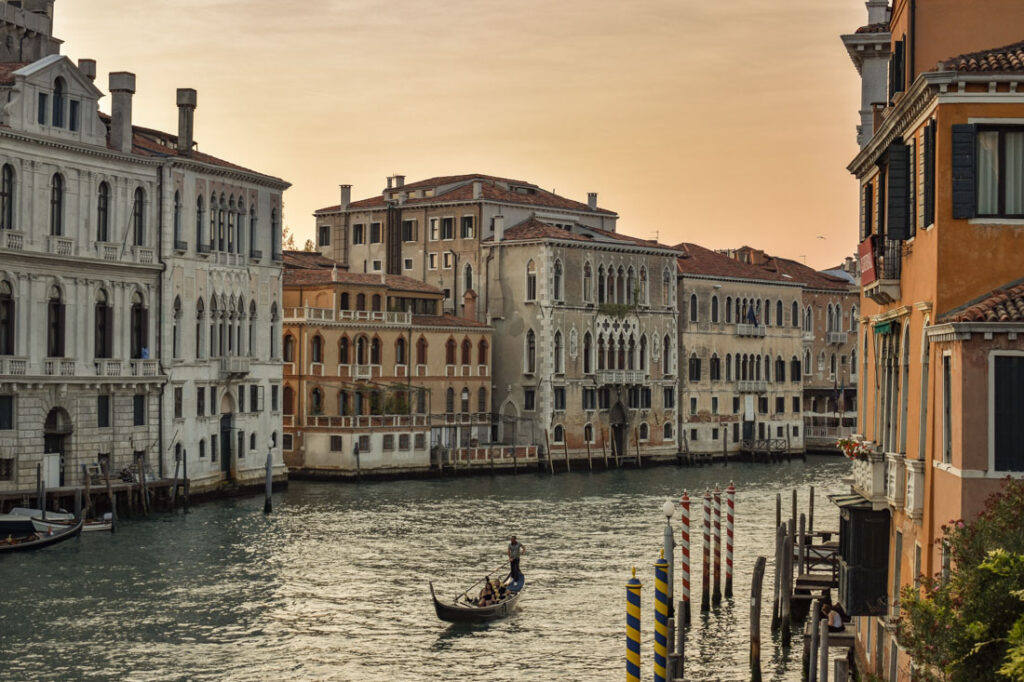
Now, before we jump in, I do have to warn you. This ten day Italy itinerary is pretty detailed. Like, how-do-you-possibly-have-time-to-write-all-this detailed. And that is intentional. You can go to any old travel blog to get a vague “two nights in here” and “one night here,” bare-bones ten day itinerary for Italy. But those itineraries don’t tell you what to do in each place, or how to get from each city to city, what websites to book things on, or what things will cost. You’d have to go look all that up individually on your own. But not with this itinerary.
Basically, what I’m trying to say is: get ready for a bit of a read! In fact, you probably want to save this for later right now by bookmarking the page or saving it on Pinterest, just in case you don’t get through it all in one go. Then, grab a cuppa, sit back, and let’s get to it!
Pssst! If you can finagle just four more vacation days, you can squeeze in Cinque Terre, Pisa, and Milan, which I describe how to do in my two week Italy itinerary. Or, if you are debating a shorter trip, I have an Italy itinerary for one week, too.
Italy Itinerary for Ten Days
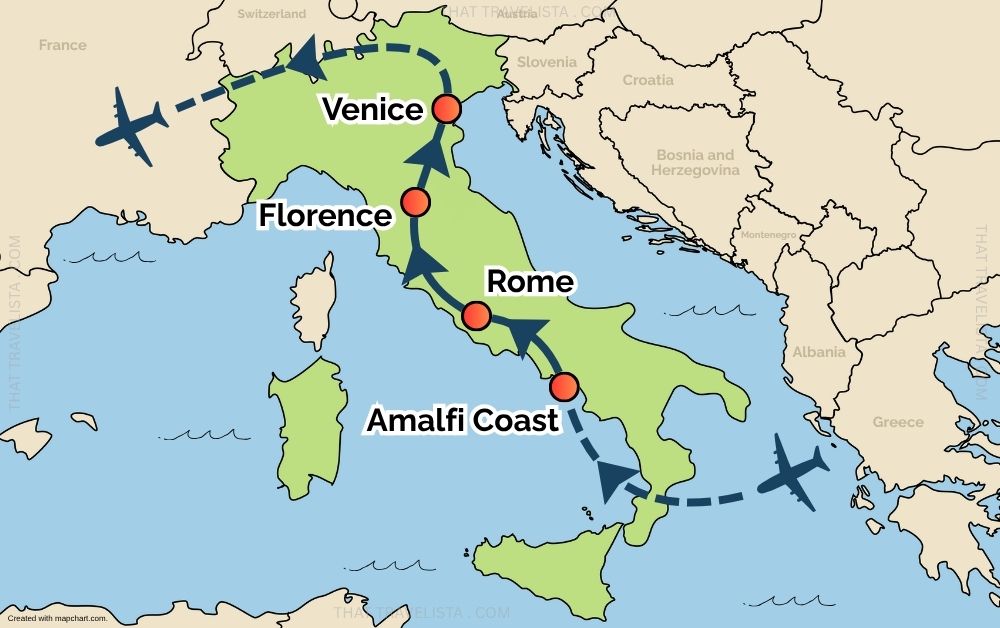
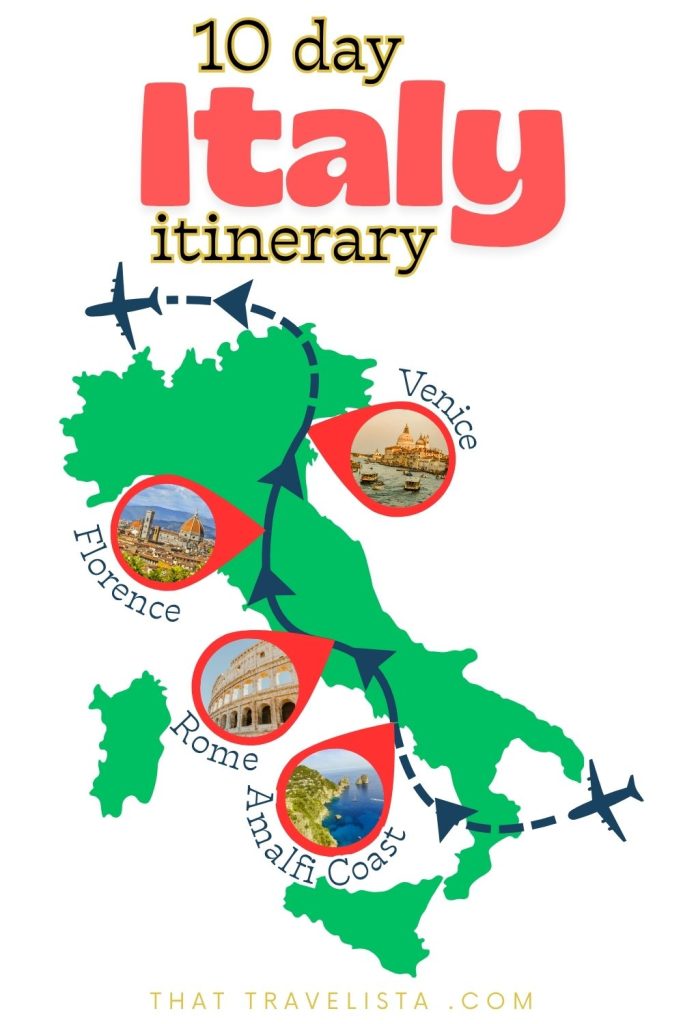
Let’s start off with an overview of this dreamy, ten day Italy itinerary, so that you can have a high-level idea of what to expect.
| Day | City | Overnight In |
| Days 1 – 3 | Amalfi Coast & Capri | Amalfi Coast |
| Days 4 – 6 | Rome (& Pompeii*) | Rome |
| Days 7 – 8 | Florence | Florence |
| Days 9 – 10 | Venice | Venice |
*If you are interested in squeezing Pompeii into this itinerary, I explain the options on how to do this in the adjustments section at the bottom of this post.
What is the Best Time of Year to Visit Italy?
The best time to visit Italy is hands down during the shoulder season. This is April – May and September – October. During these months, you can enjoy everything in comfortable weather, but avoid the extreme crowds (not to mention the heat, humidity, and prices!) of the summer. If you plan to swim in the seas, I recommend that you aim for September – early October. This way, the sea has had all summer to get warm for you.
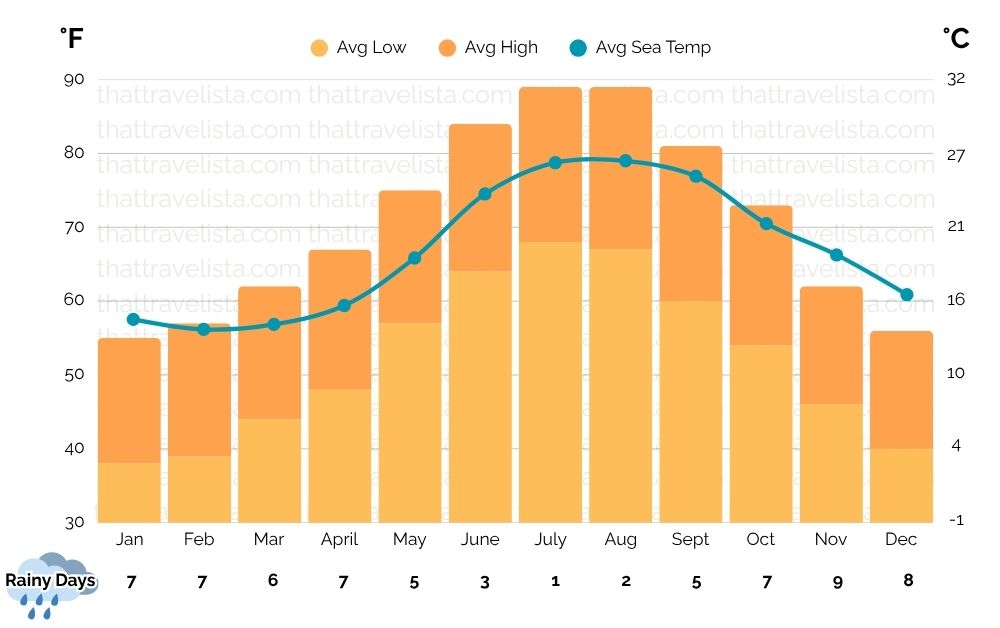
All that being said, I’ve traveled to Italy in the very middle of August and still had a lovely time. So if July and August are the only time you have available to visit Italy, you’ll still have a great trip. Just come mentally prepared for the crowds!
Winter in Italy is generally warmer than winter in central Europe. Even so, I would avoid winter if possible for this ten day Italy itinerary. That’s because it includes places that practically shut down out of peak season (the Amalfi Coast and Capri). But these places are of course still visitable if you prefer to trade gloomy skies for crowded towns and roads (which the Amalfi Coast is known for suffering with summer).
If you can’t stand large crowds, I would also recommend that you avoid Easter in Rome. Other than that, any time in Italy is a great time to visit Italy!
Oh, and just one final note on weather. Just know that Venice is prone to flooding during rain!
If you have more specific questions about your trip timing and what I think, feel free to drop a comment down below in the comments section. Yes, I actually do respond! I do also offer [travel planning calls], in case you want help tweaking your own Italy itinerary, or even starting it from scratch.
Best Way to Travel Around Italy
One of my absolute favorite things about traveling around Italy is how seriously easy it is to move around without a car. This country gets a bit of slack for being inefficient and disorganized, but you have to admit, they do public transport just fine! So this itinerary is completely rental-car-free, relying solely on trains, buses, and ferries.
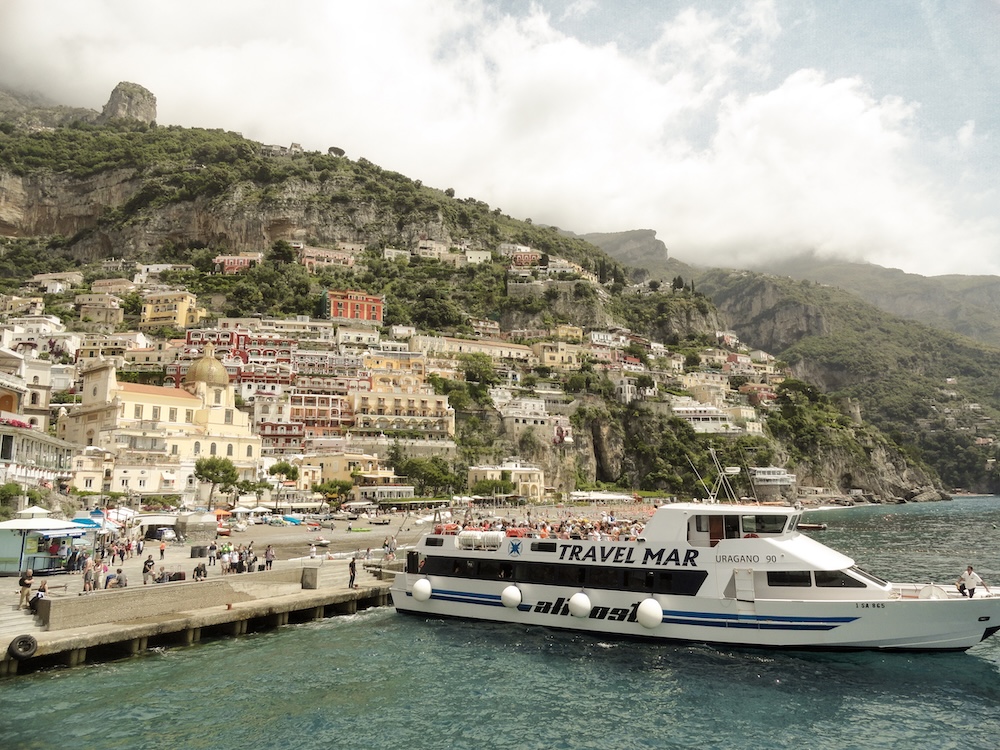
I’m sure a few of you reading this are thinking, “but I love road trips!” That’s fine, but all the more-typical destinations in Italy are simply much faster to move between via high-speed train rather than by car. That, and it’s much easier to enjoy your Italy trip without the hassle of Italian driving, filling up gas, finding and paying for parking, etc.
One very crucial tip for train travel in Italy is to always validate your ticket! Otherwise, you will be fined, and the fines ain’t cheap. (Like, truly. The fines are low-key high-key daylight robbery.) How do you validate your train ticket in Italy? Simply stick your paper ticket into the machines before you enter the train. It’ll make a noise and time-stamp your ticket. These little validation machines are typically at the entrance to each platform. If you have trouble locating them, just ask a train station employee for help. If you buy your train ticket online or via the mobile app, then there’s no need to stress about this!
In this itinerary, I include all the details and prices for each time you’ll use public transport to move around. I’ve got you covered!
(Finally) The Actual Ten Day Itinerary for Italy
Beforehand, I just want to let you know you can do this itinerary in the order I have it or the reverse. Just look up flights and see which direction is cheaper. Also, at the very end of this page, I have a section on how to adjust this itinerary if you need to. Ready?!
Amalfi Coast
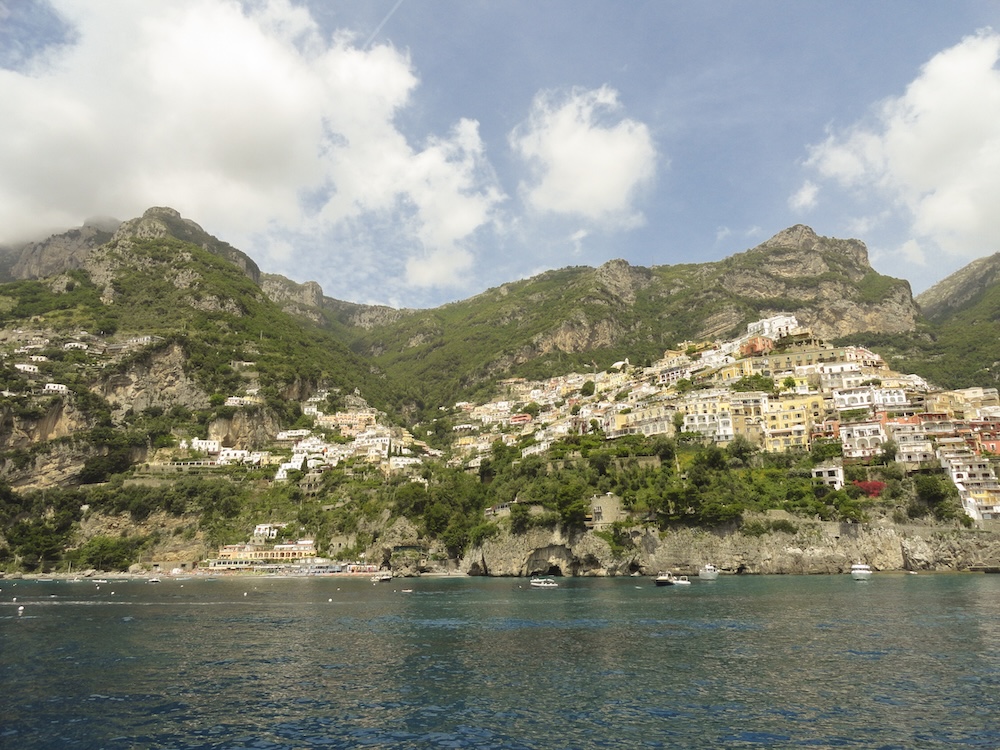
I know practically all of Italy looks unreal. But get ready for some seriously insane beauty over your first few days exploring the Amalfi Coast! Though the area is named after the town of Amalfi, it is the town of Positano that truly steals the show. (You’ll be seeing both and more with this itinerary – don’t worry!) This area is a really special place, and it’s impressive to think about how the Italians built the curvy roads and quintessential houses into the steep cliffs.
How to Get to the Amalfi Coast
This is the start of your trip, so you’ll need to fly in. The area has two airports, so be careful that you fly into the correct one. The larger international airport is Naples International Airport, also called Capodichino Airport (NAP). To get to your Amalfi Coast base* town of choice from NAP, you have a few options.
*Amalfi is what I recommend as your base for following this itinerary. But I also explain how to decide where to base yourself in the next section of this guide.
- By public transport: If you are basing yourself in Sorrento (or Salerno), then public transport may be an option. Otherwise, the hassle is not going to be worth the cost savings, as you’ll soon see. To get to Positano or Amalfi from NAP via public transport, there are three parts.
- First, travel from NAP to Napoli Centrale train station. You do this via private taxi at a fixed fare of €21. You can also pay per seat in a shared taxi, which will cost €6 per person. The ride takes 10 – 20 minutes, depending on traffic. Alternatively, you can ride Alibus. Tickets cost €5 and can be purchased in person at the vending machines on the ground floor of the arrivals area. You can also get them in advance online from the official site. This ride takes 15 minutes.
- Next, get to Sorrento. Once you arrive at Napoli Centrale train station, follow signs to the connected underground station called Napoli Piazza Garibaldi. From here, ride the Circumvesuviana train for 70 minutes to Sorrento Station for around €4. The Sorrento stop is the final stop on this line, so no need to worry about missing it.
- Finally, transfer to your Amalfi Coast town. From the bus station outside Sorrento train station (exact location here), you can take SITA bus 5070 from Sorrento. It takes either one hour to Positano or 1.5 – 2 hours to Amalfi. Unfortunately, this bus is crazy crowded, even in shoulder months. You’re not guaranteed a seat, so you might have to stand. I actually had to sit on the floor of the bus and couldn’t even enjoy the views approaching Positano *tear*. If you do snag a seat, sit on the right side for better views. Bus tickets cost €10 for 24 hours unlimited rides and are sold at “tabaccherie” (cigarette shops) or newspaper stands in every town on the route. They can’t be purchased on board the bus!
So as you can see, public transportation alone is a viable option to get to Sorrento. But it’s just waaaay too many transfers – especially right after disembarking a flight! – for anything further east of Sorrento, like Positano or Amalfi.
- By taxi or private transfer: This is the easiest option, since it is door to door and requires zero transfers. It is also the priciest option. A one-way taxi ride should (according to the price chart on the airport’s site) be fixed at €125 to Sorrento, €145 to Positano, and €155 to Amalfi. But many have trouble snagging one of these, since they are in high demand, and thus op for private transfers. You can arrange this yourself or ask your accommodation to arrange it for you. Driving time will depend on the time of day and year (the roads are extremely congested in the high season!). But you can expect anywhere from 1 – 2 hours.
- By ferry: Almost everyone agrees that the most beautiful way to arrive at the Amalfi Coast is to pull up to a town via sea. In order to travel to the Amalfi Coast via ferry, you will first need to get from NAP to Napoli Beverello port. You can do this via private taxi, at a fixed fare of €24. There is again the option of paying per seat in a shared taxi, which will cost €6 per person. The shared taxi goes to Porta di Massa, which is about a 15 minute walk from the Naples Beverello port that you will use to get to the Amalfi Coast. The drive takes 20 – 40 minutes, depending on traffic. The Alibus shuttle from the airport is another option, which costs €5, takes about 40 minutes, and gets you straight to the port you want. From the port, ferry rides to Amalfi town cost €28 – €32 and take 2 – 3 hours and less for Positano and Sorrento, which are closer. You can purchase these tickets in person or in advance online.
The area’s other airport is actually new! It’s called Salerno Costa d’Amalfi Airport (QSR), and it just (re)opened for commercial flights in 2024. However, it is mostly used for budget airline flights within Europe, like RyanAir, EasyJet, and others. If you’re flying here (or anywhere!) with RyanAir, definitely skim through my guide on how to not get ripped off! Once again, you have a few options on how to get to your Amalfi Coast base town of choice from QSR airport.
- By public transport: Just like from NAP, the hassle of getting to the Amalfi Coast from QSR is not going to be worth the cost savings. To get to Positano or Amalfi from NAP via public transport, there are two parts.
- First, get from QSR to Salerno’s main train station. You can do this by riding the Salerno AirLink bus, which takes 40 minutes and costs €5.
- Then, take a bus to Amalfi. From Salerno train station, ride SITA bus 5120 for at least 75 minutes until reaching Amalfi town, which is where the bus line ends. To get further west to towns like Positano, you would need to then hop on SITA bus 5070 from Amalfi and ride it for at least another 50 minutes. You can purchase a 24-hour ticket for these SITA buses at “tabaccherie” (cigarette shops) or newspaper stands in or near the train station.
- By taxi or private transfer: Again, this is the easiest option, since it is door to door and requires no transfers. You can grab a taxi from in front of the main terminal. These rides are not at a fixed fare, but you can expect the ride to cost upwards of €300 and take at least 1.5 – 2 hours. You can also pre-book a taxi or private transfer on your own or with the help of your accommodation.
- By ferry: In order to travel to the Amalfi Coast via ferry, you will first need to get from QSR to one of Salerno’s two ferry terminals by taxi. You can get to Concordia Ferry Terminal with a fixed fare of €50. The price to get to Molo Manfredi Port will need to be metered or agreed upon in advance. From the ferry terminal, ferry rides to Positano cost €17 – €20 and take 50 – 90 minutes, while ferry rides to Amalfi town are slightly less. Be sure to head to the correct ferry terminal based on your ticket!
Which Amalfi Coast Town to Stay In
Now, after that previous section, you might be asking yourself, “Well, what town on the Amalfi Coast should I stay in as my base?” Like I mentioned earlier, the area is named after Amalfi town, but Positano is the image that comes to mind when mentioning the area. So naturally, those two are both popular options. The third popular option is Sorrento, which is the main gateway town into the Amalfi Coast.
I’ve created little charts of pros and cons of each base town, because I think that’s the easiest way to explain it (rather than having you read more of my ramblings than you already have!).
|
Town |
PROS |
CONS |
|
Positano |
|
|
|
Amalfi |
|
|
|
Sorrento |
|
|
What Town I Recommend
For this Italy itinerary, I recommend Amalfi town as your base. It’s a good balance between price for value and ease to get to all the other things I recommend that you do in the Amalfi Coast area without needing to transfer or travel too long. In short, I believe basing yourself in Amalfi town will allow you the biggest bang for your buck in terms of time.
But I’ve stayed in both Sorrento and Amalfi town. So if you have questions on either of those, feel free to leave them in the comments section down below. Yes, I do actually respond!
What to Do in the Amalfi Coast (Three Days)
Three days on the Amalfi Coast is the minimum amount of time to “see everything.” Below is exactly how to see the Amalfi Coast in three days. Take it easy on day one, since it’s the day your flight gets in. But feel free to interchange days two and three as works best for you.
The following itinerary is assuming that you are basing yourself in Amalfi town, which as you’ll have just read above, is what I recommend. So if you base yourself elsewhere, you will have to do a little rearranging of the “day one” and “day two.”! Feel free to comment down below if you’d like my opinion on tweaking this portion of the itinerary for your alternative Amalfi Coast base town.
And just so that you can visualize everything I’m about to explain, I’ve made this niffy little map of the area.
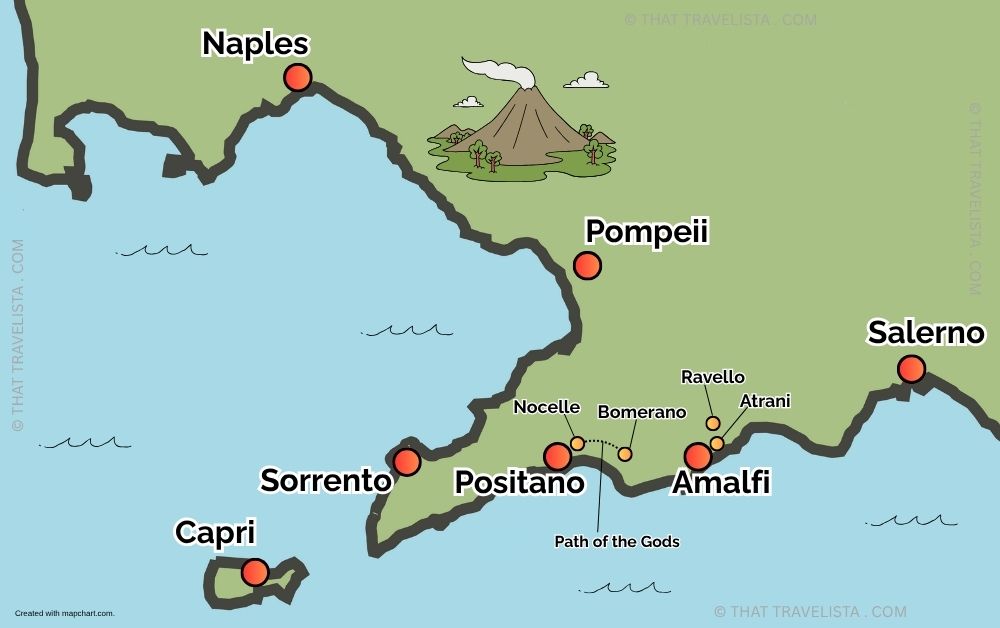
Day One: Amalfi Town, Ravello, and Atrani
After checking into your accommodation in Amalfi, it’s time to seize the rest of the day!
Amalfi
This is the town after which the entire area is named. I recommend just meandering around, popping in and out of shops that interest you, exploring little streets, and of course sitting down for something to eat. But here are a couple of things you shouldn’t miss.
- Marina Grande: This is Amalfi’s main beach. It’s located just east of the port and offers a few lidos from which you can reserve a sun bed and umbrella.
- Duomo di Sant’Andrea Apostolo: Also called the Amalfi Cathedral, this beautiful little church is one of the most photographed sites of Amalfi. You can enter for around €4. It’s actually pretty cool inside, with its stunning little cloister (Chiostro del Paradiso). But the exterior is the main show-stealer, in my opinion! (The entrance price for this is not listed officially online. So if you have any update after your own visit, please comment below so I can keep this guide as accurate as possible for future readers!)
- Piazza Duomo: Like most duomos in Italy, there is a square (piazza in Italian) in front of Amalfi’s duomo. Here, you’ll find the Fontana di Sant’ Andrea as well as some restaurants with outdoor seating.
- Via Lorenzo D’Amalfi: This is Amalfi’s main shopping street, so you really cannot miss it!
- Belvedere Cimitero Monumentale: I know, I know! It’s a little strange to list a cemetery! But this cemetery offers a beautiful view over the town of Amalfi. If you don’t want to climb up, there is an elevator located in the tunnel starting at Piazza Municipio. You can ride it up for €3.
Atrani
If you have time, you can also squeeze in a little visit to Atrani before the next stop, if interested. Atrani is the town just east of Amalfi. Photographs of its main beach do pop up once in a while online. But even so, it’s not as emblematic of the Amalfi Coast as Positano and Amalfi. So it attracts less crowds and will thus be a bit calmer!
- Spiaggia di Atrani: This is Atrani’s main beach, which I’m sure you’ll have seen in plenty of photographs. Like Amalfi’s main beach, you’ll find lidos here, from which you can rent a sunbed and umbrella.
- Chiesa Collegiata di Santa Maria Maddalena Penitente: This is apparently where the doges (rulers) of the Republic of Amalfi got crowned. But aside from the history, it’s simply a beautiful viewpoint over the sea!
How to Get to Atrani from Amalfi
- Option 1: Pedestrian tunnel. To get to Atrani from Amalfi, you can walk through the pedestrian tunnel starting at Piazza Municipio in Amalfi. The tunnel ends at the Luna Rossa parking lot, and from there you unfortunately need to cross the main road. This can of course be dangerous, so it’s not recommended for those traveling with kids. Once across the road, do NOT walk through the tunnel for cars. Instead, walk along the sidewalk, which confusingly passes right in front of Ristorante Da Zaccaria. Walk through the restaurant and out the back door (ask for help/permission if needed!). After that, it’s smooth sailing (well…walking) into Atrani! The total walk takes 10 minutes.
- Option 2: Bus. The bus seems like the obvious option after how complicated that explanation of using the pedestrian tunnel must have seemed! But remember, this is the Amalfi Coast, where traffic ruins entire holidays. So you will probably want to walk to Atrani to avoid waiting for the bus and it potentially being full. But if you see there isn’t a long line at the stop and the bus happens to be arriving soon, or if you have kids and want to avoid the street crossing then you can take the SITA bus 5110 from Amalfi to Atrani. The ride takes just 5 minutes.
Ravello
Whether you squeezed Atrani into your day or not, I simply insist that you make sure to visit Ravello! Unlike Amalfi and Atrani (and Positano), Ravello isn’t located on the water. Rather, it is high up in cliffs. Because of that, I think it’s best enjoyed in the late afternoon (or potentially the early morning), when the sinking sun’s rays beam through the curves of the mountains and create a truly magical atmosphere!
- Villa Cimbrone: Those photos of white busts perched upon a balcony overlooking where the bluest of seas meets the bluest of skies? Well they’re taken at this villa! It’s located about 15 minutes on foot up a winding road from the plaza. Entry will set you back €10, and I can report back that it’s absolutely worth it! Give yourself enough time so that you are not rushing while walking underneath the wisteria hanging over the Viale dell’Imenso or while taking in the views from the Terrazza dell’Infinito. You can check out opening hours for the villa (and its restaurant!) on the official site.
- Villa Rufolo: In Ravello’s other famous villa, you’ll find the colorful landscaped gardens you’ve likely seen photos of. Entry costs €8. You can confirm opening hours and other info on the villa’s official site. I highly recommend entering both villas unless you truly cannot! (Though if you really must choose only one, I recommend Cimbrone.)
- Ceramics: The entire Amalfi Coast is known for its ceramics. But from all the places I’ve visited in the area, Ravello is where I saw the largest amount and best offering of ceramics for sale. You can just enjoy the colorful and artisanal display of everything from small trinkets to dinner plates to large vases by window shopping (like I did). But if you want to bring something home from Italy as a souvenir, the shops will ship your purchase home for you.
How to Get to Ravello from Amalfi:
- Option 1: Bus. You can take the SITA bus 5110 from Amalf (or Atranii). The ride takes 30 minutes. Take this same bus line back down to Amalfi town afterwards.
- Option 2: Taxi. Given that you are doing the trip late in the afternoon, when day trippers have had to start heading home, you should hopefully be able to get a seat on the bus without much issue. But assuming you get unlucky, or you simply prefer to be on your own schedule, you can alternatively take a short taxi ride up. Prices are unfortunately a supply and demand type of thing. I believe I was quoted €40 for the 15 minute ride in early May, but it can be double that price (and duration) or more at other times. One thing you can do if the price is exorbitant on the day you visit is to find a couple others waiting at the bus stop to Ravello and split a taxi with them!
Day Two: Walk of Gods and Positano
Today is the day you visit the star of the show – Positano! For those of you who like non-strenuous hikes, I recommend combining your visit to Positano with the famous Path of the Gods trail, which I outline how to do below. The path ends right above Positano, and though it can be walked in either direction, walking it towards Positano instead of from Positano allows you to not only walk it downhill, but also face the views instead of having your back towards them.
But for those of you looking to relax on your vacation and nothing else, simply skip the hike and head straight to Positano from Amalfi. I provide options below for how to fill up that extra time that you would have spent on the hike.
Path of the Gods
I didn’t get to do this, but I reeeeally wanted to and had it all planned out. Bu my travel buddy wasn’t really feelin’ it, so I will just have to do it on my next visit! This hike between Amalfi and Positano takes you along the very top of the cliffs and is supposed to be ahhhmazing. Just Google “Sentiero degli Dei” and follow the route that comes up on Google Maps.
The hike starts in Bomerano, which you can reach by SITA bus 5080 from Amalfi. It ends in Nocelle, the upper part of Positano. There are cafes up in Bomerano you can grab a coffee and snack at before departing. And there are also some little eateries and juice shakes in Nocelle if you need a break and some fuel before continuing onto Positano.
From Nocelle, you can get to Positano proper by walking down the (very steep) stairs into town. But if you’re not sure that you want to put your knees through that, there is also the option of a bus. You can check out the Facebook page of the company operating it for the timetable. Look for the latest uploaded image for the Montepertuso-Nocelle line. You can buy tickets in cash on board (small notes only!).
Positano
Finally, you will have arrived at Positano, the crown jewel of the entire Amalfi Coast! From its stunning ceramic-titled church dome, to its colorful houses literally hugging the cliff, to its view of the sea, it’s really no wonder all the crowds flock here. Pack a lot of patience if you are visiting Positano in the high season!
Once you get to town, you will probably want to eat! After that, it’s time to explore Positano and its main sites.
- Marina Grande (Positano Spiaggia): This is Positano’s main beach. As such, it’s the most convenient to reach. It also boasts the prettiest backdrop of Positano itself as you look out onto the glistening sea. There is a public part of the beach, where you can lay out your own towel. And there are also private areas where you can pay for a sun bed and umbrella. I recommend reserving these in advance if you are coming in the high season!
- Chiesa di Santa Maria Assunta: That beautiful dome I mentioned above and you see in all the photos of Positano? It belongs to this church. You can simply admire from outside or also enter. Entry should be free. But if you find that this changes during your visit, please comment below and let me know!
- Le Sirenuse Hotel’s La Sponda Restaurant: Staying at this luxurious hotel might be out of your budget. But you can enjoy that celebrity-famous view of Positano at a fraction of the cost by having dinner at the hotel’s restaurant. You will need to book in advance at the restaurant’s official site.
- Fornillo Spiaggia: I didn’t know about this beach on my first visit to Positano, but I’ve saved it for when I return! It’s a scenic walk from Marina Grande and less crowded. This beach doesn’t have a view of town, though. So keep that in mind if that is your priority while you lounge. Like the main beach, this one also has a free zone to the side. But you can also reserve a sun bed.
- Arienzo Beach Club: Now, if you do want a view of Positano while you lounge away, albeit obstructed, then Arienzo Beach Club is the place for you. And if you’ve ever seen that Positano beach with the orange and white umbrellas, this is the one. It is one further away than the other options, and you can get a water shuttle to reach it from Positano. It’s quite pricey, especially if you are in the front row, but it has a nice view and is often photographed. Again, you’ll definitely want to make a reservation in advance.
- Boat excursion: If you can’t stand larger crowds in small places, you’ll want to consider booking a few-hour excursion into the sea. Positano is best admired from the water, after all! This one with loads of snorkel and swim stops plus drinks included looks ahhhmazing and is on my list for my next visit! It has an afternoon departure option and is short enough to squeeze in after the morning hike, some lunch, and a stroll around town while still getting you back to shore in time for the ferry ride from Positano back to Amalfi town.
How to Travel between Amalfi and Positano
After your day of fun in the Positano sun, you’ll need to get back to Amalfi town. There are three options to do this. And if you opted to skip* the hike and just spend the entire day in Positano, then these three options in the exact reverse are how you would have arrived at Positano in the first place.
- Option 1: Ferry. Perhaps the most scenic option for getting between Amalfi town and Positano is via ferry. Tickets will set you back €10 – €14 each way, and travel time is 10 – 30 minutes one way.
- Option 2: Bus. In the case of choppy waters, wanting to travel on a budget, or wanting to be up close and personal with the impressive cliffs, the bus is another option to get between Positano and Amalfi town. Just hop on SITA bus 5070 (it runs both directions) and ride the bus for around an hour. Unless you want to make several stops along the way, I recommend foregoing the €10 ticket for 24 hours of unlimited rides, since a one-way ticket is just €1.50. In any case, you can get the ticket at “tabaccherie” (cigarette shops) or newspaper stands. But be warned! Even in shoulder season, these buses along the main route get packed! You might even have to let a few pass before finally being able to board. So it’s a bit of a risk to your holiday to rely on this bus route in the shoulder and high seasons.
- Option 3: Taxi. This is the easiest and priciest option. You’ll still be in the same bumper to bumper, two-lane traffic like with the bus, so the travel time should still be around or a little under an hour. But it’ll be more comfortable and on your own schedule. Like I mentioned above, taxi prices can depend mostly on supply and demand (and maybe some bartering, depending on the time of day and season). But you can expect to pay something like €120 one way. In Amalfi, you can get a cab in front of the main piazza, by the main road.
*If you do decide to skip the famous hike, and you don’t plan to lounge at a beach club all day, then the town of Positano itself likely will not be enough on its own to fill up an entire day. So I suggest that you fill a good portion of the day with a boating excursion (to replace the time you would have spent hiking). Like I mentioned earlier, Positano is best enjoyed from the water! Plus, it gives you some reprise from the crowds.
This all-day tour departs from Amalfi, includes drinks, and zips you all around the Amalfi coast with stops for snorkeling scattered throughout the day. On the 6-hour boating excursion, you stop at the famous Furore beach (the one under the bridge!) as well as other hidden gems, get to see some less famous Amalfi Coast towns, and have enough free time to wander around Positano on your own before being brought back to Amalfi at the end. No ferries, buses, or cabs needed.
Day Three: Capri
The celebrity-favorite island of Capri makes for the perfect final day in this unreal region of Italy before this itinerary takes you up north. It’s known for yacht-studded waters, glowingly-blue grottos, and upscale shopping. Maybe just reading this hurt your bank account a little bit… but not to worry! I’ve got you covered with how to visit Capri on a reasonable budget, if (like me) that’s what you prefer to do.
How to Get to Capri from Amalfi (and Back!)
The only way to get to and from Capri is by water (it’s an island, afterall!). So catch a ferry from Amalfi, which will set you back around €28 for a 50-minute ride.
Alternatively, you can also book a boating excursion that transports you from Amalfi to Capri and back with tons of time on and around the island in between. This all-day one gets you to Capri in a small group, with some snorkel stops along the way as you pass Furore beach, Praiano, and the rest of the coast en route to Capri. You then get three full hours to explore the island of Capri on your own before hopping back aboard for a 1.5 hour sail around the island, passing by the famous Faraglioni rocks, the Green Grotto, and more. Then after some more break time in Capri to swim some more, you make your way back to Amalfi. Such a dreamy day, right?!
What to Do in Capri (One Day)
Whether you DIY the day trip to Capri using the ferries or you opt for a private boat day that gives you free time on the island, there is a lot to do on Capri. Too much to fit into one day! So you will need to pick and choose from what interests you most!
- Marina Grande: You don’t need to even bother with adding this to your list, because you’ll have to walk by this colorful harbor-front area after disembarking the ferry.
- Boat tour around the island: This is the best way to fully take in Capri’s magnificent cliffs. You’ll also sail by Faraglioni, that ultra-iconic arch in the water that you’ve probably seen all over Instagram and any Capri travel brochure. These boat tours can also include an add-on of the Blue Grotto. Without the Blue Grotto, expect to pay €21 for an hour-long tour. (Again, this price is just the latest update I have, as it is not listed officially anywhere. So if you have any update after your own visit, please comment below!)
- Blue Grotto: This glowy cave is probably the most famous attraction in Capri! Unfortunately though, it’s a bit of a time-suck because of that. We were told we would have to wait on a small, bobbing rowboat for an hour before our turn to enter. My friend was already suffering from sea sickness, so we skipped the grotto. The only way to avoid the long wait is to be the first ones out, but the best time for viewing the grotto is noon – 2pm, so it’s quite the dilemma! In any case, entry costs €18.
- Piazzetta: This is the island’s most famous square. Be sure to stroll down the Via Camerelle while you are in the area.
- Anacapri: The island of Capri actually has two towns; Capri and Anacapri. Anacapri is less crowded than Capri. It also has more artisanal shops, rather than just high-end boutiques. While here, definitely pass Piazza Vittoria, the main square. You can also ride the chairlift 13 minutes to Mount Solaro for a view (€11), or walk there for free in 30 minutes.
- Villa San Michele: Entry costs €12 for some spectacular views.
- Gardens of Augustus: This is where you can get that classic Capri viewpoint of the Faraglioni from high up above. And entry only costs €2.50!
- Marina Piccola: If you’d rather spend your half-day relaxing at the beach instead of running around the island, this beach is a classic. And, as you probably expected by now, you can hang out on the free side or book sunbeds. To book them in advance, head to the official site and call or write them. You can also ask your hotel for help with the call if you need.
- La Fontelina: If you are after that classic Capri
beachrocky area by the sea with the blue-and-white-striped umbrellas that you’ve probably seen floating around Pinterest and IG, then you’ll want to come here. Again, you can book your sun lounger in advance at the official site.
Where to Stay in the Amalfi Coast
Like I said above, I am recommending Amalfi town as your base for this ten day Italy itinerary. But in case you decide to stay in Positano or Sorrento, I am providing two options for each of the three main base towns. If you do decide to base yourself in Positano or Sorrento, you will need to tweak this itinerary a bit to still fit everything in. If you would like my help with that, or with personalizing this itinerary in general, feel free to book a call.
Where to Stay in Amalfi Town
- Hotel Fontana: Mid-range option in the very heart of the main square (short, flat walk from bus stop and ferry port), with balconies overlooking the cathedral and rooms with sea views.
- Hotel Luna Convento: Higher-end convent-turned-hotel a short stroll from the main square and port, with a private pool and beach offering lounge chairs, umbrellas, and views of Atrani.
Where to Stay in Positano
- Villa Maria Antonietta: Mid-range, simple yet charming boutique hotel, centrally located and within walking distance of bus stop, offering views of the sea and town.
- Covo Dei Saraceni: Higher-end beachfront hotel a short walk from the ferry port, with a rooftop pool and breakfast area offering better views of Positano than any beach (saves the need to rent day beds elsewhere).
Where to Stay in Sorrento
- Hotel Sorrento City: Mid-range option just a 3-minute walk from the train station and with a charming rooftop bar.
- Hotel Palazzo Guardati: Higher-end option, centrally located and with a rooftop terrace offering a small pool and views of Mount Vesuvius and the Bay of Naples.
What to Eat in the Amalfi Coast
Food in Italy is good just about everywhere. But each region is known for something different, so why not try all your favorite Italian dishes (and some new ones!) right in the specific regions or cities where they were invented? I always try to do that when I visit. So throughout this guide, I will be listing and explaining some must-try foods from each place you will be overnight-ing. To start, here are some traditional Italian foods from the Amalfi Coast (and Naples, which is nearby you have to pass through) to look for on your menus.
- Mozzarella di Bufala: This famous Italian cheese is made from Italian water buffalo milk instead of cow milk, which mozzarella without the “di bufala” is. It comes from the region of Campania (the region where Naples, the Amalfi Coast, and Capri are), but especially Salerno, a city just to the east of the Amalfi Coast. A lovely way to try this item would be in a caprese!
- Lemoncello: Without even trying, you will find this sweet, lemon liquor pretty much everywhere you pass while exploring the Amalfi Coast.
- Pasta al Limone: Given all the lemons in this part of Italy, it’s no surprise they found their way into the pasta dishes as well. This creamy dish with cheese and lemon is so unique and a must to try when in the area.
- Anything Seafood: Since this area hugs the coast, get your fill of fresh seafood pasta dishes while here!
- Pizza: The birthplace of pizza is Naples, and you might have time to stop for a bite on the transfer from the Amalfi Coast to Rome (I discuss this in the adjustments section of this itinerary). But if not, the Amalfi Coast was part of the former Kingdom of Naples, so I’d say that it’s the next best place to try the Italian staple. Authentic Neapolitan pizza is made in a wood oven (this part is crucial!) with just the simple ingredients of dough, tomatoes, mozzarella, olive oil, and a few fresh basil leaves.
Rome
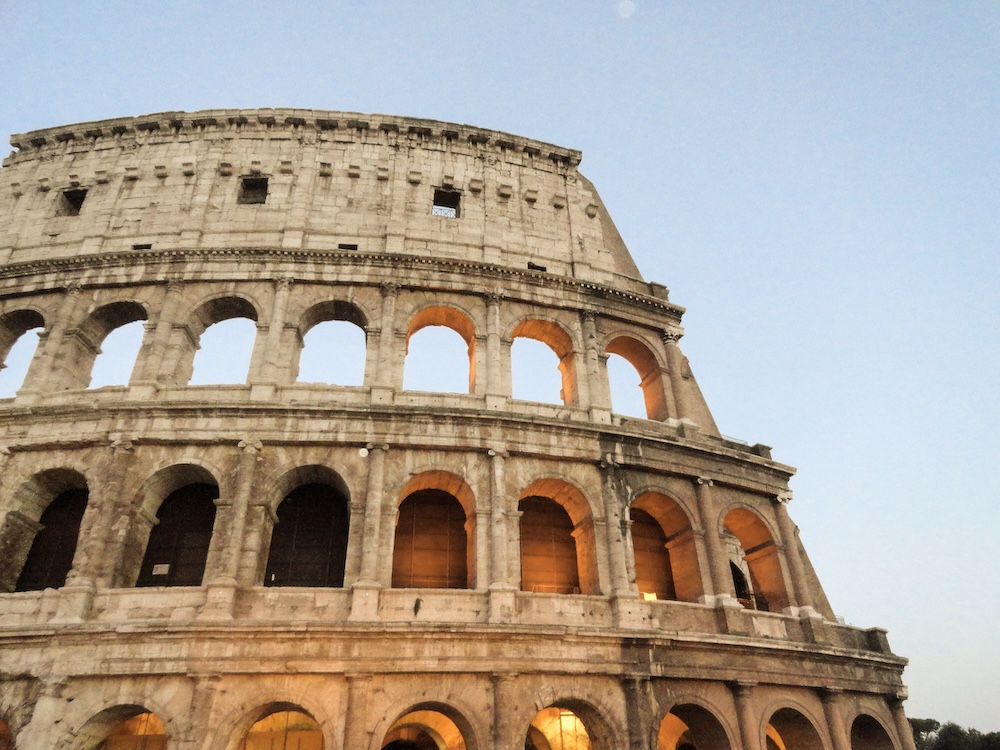
Rome. The Eternal City. This place needs no introduction, since I’m sure you learned plenty about it in grade school. As the former capital of the Roman Empire and the current capital of Italy, Rome is a mix of old and new like you’ve never seen. Huge, crumbling ruins from 2000 years ago contrast against beeping Vespas zipping through the cobblestoned streets. Try to ignore the street vendors with no regard for personal space selling selfie sticks and whizzing gadgets, and I’m sure you’ll fall in love with Rome as I have.
How to Get to Rome from the Amalfi Coast
Like usual, you have a few different options for how to make this journey from the Amalfi Coast to Rome.
One option is a private transfer the entire way. As you can probably guess, this is not a cheap option. But might be worth it with a large enough group to split the price between. You’ll have to search for price quotes online depending on the car size, company, and pick up and drop off locations. But as an idea, a private transfer from Rome to Positano or Amalfi might cost around €600 and will take at least 3.5 hours. If you do hire a private car, I recommend considering arranging a stop in Pompeii between the Amalfi Coast and Rome if you are interested in Roman history.
All other options will divide this journey into two parts; getting from the Amalfi Coast to Napoli Centrale train station, and then getting from Napoli Centrale train station to Rome. To get to Napoli Centrale from the Amalfi Coast, you have a few options.
- Option 1: By public transport. Like I explained above, this option is only worth the hassle if based in Sorrento. If that is the case for you, then you can ride the Circumvesuviana train from Sorrento’s train station to Napoli Garibaldi train station. This takes around 70 minutes and costs around €4. From there, without exiting the station, follow signs to walk over to Napoli Centrale train station.
- Option 2: By ferry. From your port at either Amalfi, Positano, or Sorrento, hop on a ferry heading to Naples. From Amalfi town, this will cost €28 – €32 and take 2 – 3 hours. You can expect less for Positano and Sorrento, which are closer. You can purchase these tickets in person or in advance online. Once at the port in Naples, you will want to get to the train station. You can do this via private taxi, which should have a fixed fare of €24 and take 10 – 20 minutes, depending on traffic. You can also get an Alibus shuttle from the port that stops at the train station before heading to the airport for €5. This ride takes about 15 minutes, and you can buy the tickets online from the official site.
- Option 3: By taxi or private transfer. You can arrange this ride yourself or ask your accommodation to arrange it for you. Driving time will again depend on the time of day and year, but you can expect anywhere from 1 – 2 hours. According to the official prices for Positano to Naples train station, you can expect to pay around €250 for this journey. Departing from Amalfi will cost more and from Sorrento will cost less.
Once at Napoli Centrale, take the train to Roma Termini. This journey lasts either one, two, or three hours, depending on white type of train you take! Naturally, the costs are different, too. If you are purchasing a ticket for the very next day, you can expect to pay €13 for a 3-hour Regional train, €27 for a 2-hour Intercity train, or €57 for a 1-hour Frecciarossa train. If you are buying one month out, the prices for the faster trains drop to €20 for a 2-hour Intercity train, or €25 for a 1-hour Frecciarossa train. And if you buy three months out, the 2-hour Intercity train drops to €15.
So what’s the moral of the story? To always buy your high-speed train tickets in advance if you can in Italy! You can do this at the official TrenItalia website.
What to Do in Rome (Two and a Half Days)
Three days in Rome is the minimum amount of time to “see everything.” Below is exactly how to see Rome in three days. Take it easy on day one, since it’s the same day you travel to Rome from the Amalfi Coast and will therefore be more of a half day. But feel free to interchange days two and three as works best for you. If you get in way too late on day one (perhaps due to stops in Pompeii and/or Naples, which I explain how to do in the adjustments section below), you can tack it onto day three.
Day One (Half Day): Rome’s Historic Center
Walking straight through this route as I have it below is 45 min (1.75 miles or 3 km), just to give you an idea of total distance on day one. Start at whichever end you prefer.
- Largo di Torre Argentina: Although Shakespeare’s famous play has the scene taking place in the senate building, this is the correct location of where Roman senators assassinated Emperor Julius Caesar by stabbing him 23 times (because just once wasn’t enough, I guess?) to death in 44 BC. You used to only be able to observe it from above, but now you can enter. I was happy just viewing from above, but tickets will set you back €7 in person or €8 if you book online at the official site.
- Piazza Navona: Many cafes line the edges of this stunning, rectangular piazza, which also has three impressive fountains, and a church in between them.
- Pantheon: Originally constructed as a Roman (pagan) temple for all gods in 120AD, it was later transformed into a church in 609 AD. Even so, everyone calls it the Pantheon, which means “honor all Gods” in Greek. Entry will set you back €5, plus an additional €2 if purchasing in advance online from the official site.
- Trevi Fountain: This is Rome’s largest and most-famous fountain. Prepare for major crowds, though nowadays, you follow a queue to enjoy this attraction. Unless of course you arrive very early in the morning or late at night!
- Scalina Spagna: You probably know it by the English name of the Spanish Steps. This famous staircase and its piazza in front are a popular hang-out spot.
- Passeggiata del Pincio: After exploring central Rome, it’s time to head a bit uphill for some free views of Rome’s historic center and the Vatican in the distance. I timed my visit around sunset, and the lighting was great! Consider making a slight detour through Piazza del Popolo on your way up or down, but don’t accept any roses from anyone offering them while there! And for those interested in art, the Galleria Borghese is in this same park.
Day Two: Colosseum
- Colosseum: There are few things so strongly-associated with ancient Rome as a colosseum. And while in the empire’s capital, you’ll of course have to check out the most famous colosseum of them all! Though today it is sadly in ruins, back in its prime, this thing sat 50,000 guests and even had retractable shades. Tickets to enter will set you back €18 for this plus the next two sites. You can buy them in advance online from the official site. This price I quote just above is the highest price, but those 25 years and younger actually get discounts! So definitely look into that if you are traveling with kids.
- Roman Forum: Just across the way from the colosseum is the Roman Forum. This area hosts ruins of numerous important government buildings during the ancient Roman Empire. It’s honestly SO cool walking around, seeing how huge the ruins are, and using your imagination to fill-in-the-blanks for how it must have looked back then – almost 2000 years ago!
- Palatine Hill: This is connected to the Roman Forum. It’s where all the cool kids lived during the Roman Empire – the aristocrats and the emperors and all that jazz. If you are in a time crunch and must forgo something this day, I would let it be this instead of the colosseum or forum.
- Arch of Constantine: This arc sits right outside the Colosseum, so you won’t miss it! But I’m just listing it here so that you notice it when there. It was built in 302 AD and the largest surviving one of its kind.
- Via dei Fori Imeriali: This street is my favorite part of Rome, especially at dusk! You can look down on the Roman Forum from above on one side and view other incredible ruins on the other. It connects the Colosseum to the next attraction below.
- Vittoriano: This huge, white marble building almost doesn’t fit in with its ancient surroundings. But that’s actually what I love about Rome! The juxtaposition of old and new is just one of a kind in this city. But anyway! This building is a memorial to Victor Emmanuel II, the first king of the united Italy as we know it today. And if you head up to the building’s panoramic terrace, you get (no exaggeration) the best view over everything you’ve just been exploring today and more. Tickets are €18 (with concessions for certain ages and groups), and you can buy them in advance online from the official site.
Day Three: Vatican City
- Vatican City: Technically, you’re leaving Italy today and entering a new country! Yup, the Vatican is its own country – the smallest country in the world – and it’s ruled by the Catholic Pope. There are basically three things to see while here: St. Peter’s Square, St. Peter’s Basilica, and the Vatican Museums. St. Peter’s Basilica is free to enter, but the dress code is very strict. So be sure that your shoulders and knees are covered (this goes for all genders and ages!). There is a slow moving-crowd-slash-line to pass through security and get inside. You can book your basilica visit in advance online for €7 if you would like to select a date and time in advance, plus get a digital audio guide. And once inside the famous basilica, you can climb up to the dome for iconic views. To the right from the entrance, there should be a “Cupola” sign. Follow the sign until at the ticket office, where you can purchase a ticket to either climb the whole way for €8 or one to take an elevator partway up for €10. You can book this cupola viewpoint online for €17 and €22, respectively, if you’d like to secure your date and time in advance. Next-door-ish are the Vatican Museums, which house the world-famous Sistine Chapel. You’ll pay €20 for entry (which unfortunately has a separate security line from the basilica), plus a €5 online booking fee if you book in advance on the official site, which I highly recommend you do. The Museums are closed Sundays, except the last one of every month, on which entry is free. However, you can only enter with a guide that day. So you end up paying €20 for a guided tour, even though the actual entry fee itself is free. Seeing Vatican City should take up a whole morning (or half day).
- Castel Sant’Angelo: Emperor Hadrian originally commissioned this as a mausoleum for himself and his family, but it’s since been used as a fortress, castle, and currently a museum. I didn’t enter the museum, so I can’t recommend whether you enter or not. But I think this castle over the river and the bridge leading up to it (which offers views of the Vatican in the distance) are all worth the stop.
- Wander: Explore on your own! Get lost in the cobblestone streets! You’ve checked off all the “can’t miss” things everyone else does, but who wants their trip to be just the same as everyone else’s? If you just run around ticking off attractions, I’m not sure you’ll leave liking Rome. But wandering its less-central neighborhoods (like Trastevere), strolling along the river, popping into a random church – these are the things that will leave you loving Rome.
Where to Stay in Rome
Where to Stay in Rome
- Best Western Plus Hotel Universo: Mid-range option a short walk from train station.
- Hotel Smeraldo: Boutique hotel option in Rome’s historical center, with amazing breakfast included, a rooftop terrace, and suite options (which is nice for families).
What to Eat in Rome
These are some Roman foods to keep an eye out for while in Rome.
- Spaghetti alla Carbonara: This beloved Roman dish actually arrived on the Italian scene relatively recently, in the mid-1900s. It’s made by mixing whisked eggs and grated cheese into cooked spaghetti, then adding in cured pork, topping it all with black pepper and, of course, some more cheese.
- Cacio e pepe: The name of this Roman dish translates literally into “cheese and pepper.” And… well, that’s a pretty good description of what it is!
- Pizza al taglio: While pizza itself was not invented in Rome (like I mentioned above, that’s Naples), pizza by the slice, or pizza al taglio, was. But it looks far different to the triangularly-sliced pizza you may be used to back home. Here, the slices are cut into rectangles and often piled high with meats and/or vegetables. It’s considered street food, so it’s the perfect quick lunch if you don’t have enough time for a sit-down meal as you explore the attractions in Rome.
- Supplì: These are another convenient Roman snack to grab while on the go! They are fried, breaded balls of seasoned rice with cheese and sometimes meat inside.
- Bruschetta: This popular Italian appetizer does not hail from Rome itself, but its origins date back to the Roman Empire, or maybe even to the Etruscans who came before. In any case, as the capital of the Roman Empire, Rome makes a pretty good place to try some authentic bruschetta alla Romana. This is grilled bread rubbed with garlic and topped with olive oil. Of course, no one will blame you if you get the version with tomatoes as well!
Florence
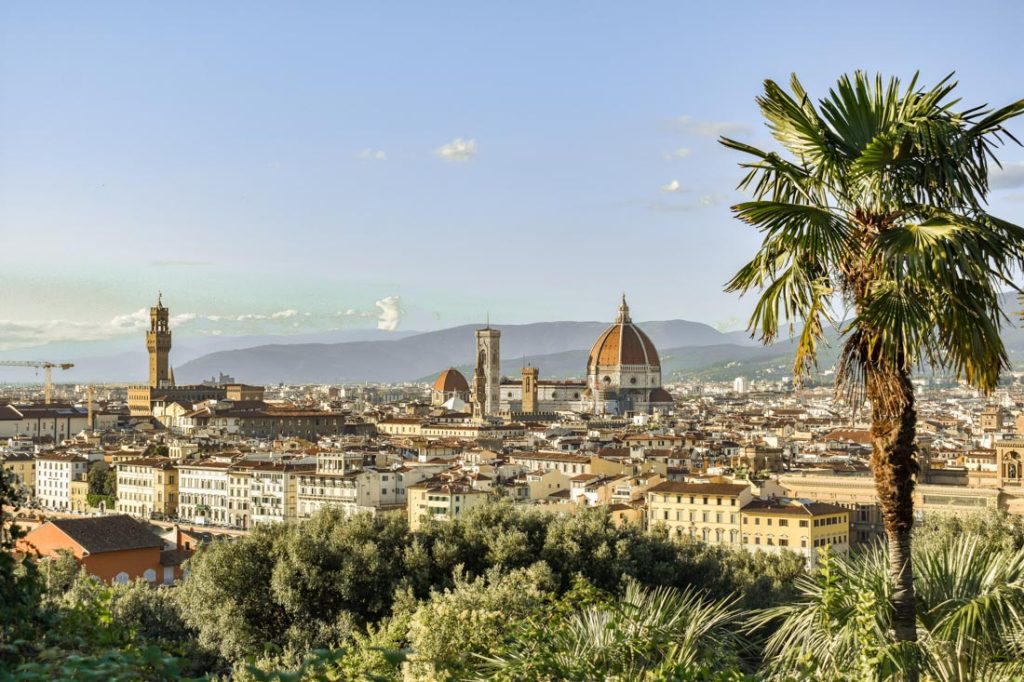
As the birthplace of the European Renaissance, Florence is known for all things art. It houses world-famous masterpieces, such as the David statue by Michelangelo and The Birth of Venus painting by Botticelli. But even if you aren’t an art fanatic (*slowly raises hand*), Florence is definitely still a can’t-miss Italian destination with plenty of beautiful architecture and surrounding scenery to enjoy.
How to Get to Florence from Rome
Hop on an early, direct train from Roma Termini train station to Firenze S. M. Novella train station. This takes either 1.5 hours or 4.5 hours depending on what kind of train you take. (Are you seeing a theme yet with train options in Italy?) If you are buying a ticket for the next morning, you can expect to pay €25 for a 4.5-hour Regional train or €55 for a 1.5-hour Frecciarossa train. If you are buying one month out, the price for the 1.5-hour Frecciarossa train drops to €20 – €30.
What to Do in Florence (Two Days)
Many people recommend purchasing the Firenze Card because it covers a lot of the main things to see in Florence. But for two days in Florence (or even three days in Florence), I am not convinced that the card is worth it. So I actually recommend purchasing the Brunelleschi Pass instead. This pass includes entry into the Duomo (which is free anyway), a climb to the Cupola (the dome) of the Duomo, a climb to the Campanile (the bell tower), entry into the baptistery, entry into the Duomo museum, and entry into the crypt beneath the duomo. It costs €30 which can be bought on the official website.
Now, before I get into my day-by-day breakdown for what to see and do in Florence, I want to say that I actually think it is better if you make your own Florence itinerary. This is because there are at least three different viewpoints to get up without elevators and two main museums. Do you anticipate being able to climb up and down three sets of stairs in one day? Or would you prefer to space all the viewpoints out as much as possible? Do you like the idea of having one big museum day? Or do you prefer to spread the art out and visit one museum each day?
These are highly dependent on personal preference! So I think it’s good to simply take the attractions I share below and make your own split over two days based on the museums and viewpoints. All of Florence’s main attractions are pretty compactly located, so it’s not hard to just plan the remaining stops around whatever you decide with the viewpoints and museums.
But for those of you with no real preference, below is how I would personally split the two days, based on my own experience in Florence. If you’d like to read through the non-condensed version, complete with individual photos, you can also check out my self-guided two day Florence itinerary.
Day One
- Accademia Gallery: This is the museum with the world-famous The David statue. Now, I normally wouldn’t start the day with a museum. But because this one only has one piece of art for which most visitors enter it, and because it’s the furthest north in everything I recommend that you see, I think it makes sense to knock it out before moving south for the rest of the day. The entrance fee will set you back €16, plus an additional €4 if you book in advance at the official site. But the other plus about heading here first thing in the morning is that you might save that online booking, unless you are visiting in the high season.
- San Lorenzo Market: This is Florence’s most-famous market, and it’s a stone’s throw away from the Accademia. So after taking in the famous statue, stop by here to shop leather goods and fuel up in the indoor food stalls.
- Cupola: Next, head to the Duomo, but instead of entering it, you will be climbing up to Bruneschelli’s Dome (aka, the cupola), which has a side entry. The famous cupola is named after the architect who designed it and is the most impressive part of the entire church. They literally had to invent new tools and architectural systems to create it! To enjoy the views at the top, plus admire the fresco on its interior, you’ll have to select a specific time slot when you buy your ticket! Otherwise, you will be turned away and asked to return. Like I mentioned earlier, I recommend getting the Brunelleschi Pass, which includes this climb up to the cupola.
- Battistero di San Giovanni: Once you exit the duomo, head to this octagonal building right across the cathedral’s main facade. It’s a pretty quick visit, but I enjoyed the Byzantine-like mosaic inside. It was actually slightly surprising to see, in contrast to all the typical-Renaissance paintings. Tourists will be snapping pics of the gold doors outside, but those are actually copies. The real ones are in the Duomo Museum (which you also get entry into with the Brunelleschi Pass)!
- Campanile di Giotto: Yes, yes, you already climbed up the cupola. But there’s another stellar viewpoint nearby! This time, the view is the cupola itself. And this climb is also included in the Brunelleschi Pass.
- Piazza della Repubblica: This is one of Florence’s main squares. It was actually the center of the city back in Roman times.
- Piazza della Signoria: My favorite part of this busy square is definitely the Loggia dei Lanzi. It’s pretty much a free, open-air museum of impressive sculptures that honestly should be in one of the museums. Also in this square is a copy of the David statue, for those of you who don’t pay to see the real thang in the Accademia. It’s located just in front of the next item on this list.
- Palazzo Vecchio: I didn’t enter this, since I had already entered a lot of attractions and gone up to a lot of viewpoints by this point in my trip. So I just enjoyed the free courtyard area. But I do plan to enter on my next visit to Florence, because it’s supposed to have a really nice view of the Duomo.
- Ponte Vecchio: I’m sure you’ve seen plenty of photographs of this iconic bridge, since it has become synonymous with Florence itself. It was originally a passageway so that the Medicis (a super rich family that basically made Florence….well, Florence!) didn’t have to walk with the common folk on their commutes to work from their [home] palace. Since then, shops have been added and give it the look it has today. Prepare for some crowds here!
- Ponte alle Grazie: If you want that picture perfect view of the Ponte Vecchio, then you will want to head one bridge over, to the Ponte alle Grazie. Even if you do not care for snapping pics, it is a nice full view of the Ponte Vecchio.
- Basilica di Santa Croce di Firenze: I didn’t enter this church, since admission was not free and I was a bit churched-out by then. But I do think it’s in a picturesque area and warrants passing by, especially since it’s not far at all from the previous item on this list.
Day Two
- Basilica di Santa Maria del Fiore: It’s the third largest church in the world and practically the symbol of Florence itself. Entry is free, but prepare for a massive line at least an hour long unless you visit first thing in the morning (hence why I have it first on the list!) or in low season.
- Crypt of Santa Reparata: This is also included in the Brunelleschi Pass, which was the only reason I saw it. But once I arrived, it was actually cooler than I expected. It’s basically church ruins from 405AD inside the duomo. The only unfortunate thing about the crypt is that you have to wait in the same line as for the free Duomo entry. So definitely time these two activities together, even if you aren’t following the order of this list!
- Uffizi Gallery: Uffizi means “offices” in Italian, and this building actually used to be the Medici’s offices. But nowadays, it’s a world-famous art museum. The most-famous art piece here is the Birth of Venus painting, but I enjoyed the Medici’s collection of Roman statues that were scattered throughout. Entry to the Uffizi costs €25, plus €4 for the skip-the-line online booking fee on the official site.
- Vasari Corridor: Do you remember that iconic bridge I mentioned a few lines up? And remember the passageway inside that the Medici used to commute? Well this is that passageway! It recently opened to the public. So you can enter it starting from the first floor of the Uffizi Gallery and then walk over the Arno River via the inside of the Ponte Vecchio bridge. Entry to this corridor is purchased in combination with a ticket to the Uffizi for a combined price of €43, plus €4 for the required online booking fee on the official site.
- Palazzo Pitti: Normally, palaces are for royalty…but not in Florence! This palace belonged to the Medicis (shocker, I know). I personally have toured a bit too many European palaces at this point to justify continuously paying entry. So I did not pay the €16 entry fee and simply observed from outside. However, I did regret not having arrived earlier in the day than I did, to buy a Boboli Gardens ticket (€10)! You can purchase this online in advance from the official site (the same site as for the Uffizi) for an extra €3 fee.
- Piazzale Michelangelo: End your day with the best viewpoint in Florence! It requires an uphill walk and is the furthest out you’ll get from the city center. So to make the trek worth it, you might bring some snacks and hangout for a while (like everyone else does!).
Where to Stay in Florence
Where to Stay in Florence
- Hotel Cantoria: Mid-range option a short walk from the train station.
- Hotel degli Orafi: Higher-end option in the heart of Florence with unreal views of the Ponte Vecchio bridge and Arno river from the breakfast area, plus a rooftop bar with views of the duomo and Palazzo Vecchio.
What to Eat in Florence
These are some Florentine and general Tuscan traditional dishes to try while in Florence.
- Bistecca alla Fiorentina: You will have zero issue finding Florentine-style beefsteak to try in a restaurant in Florence. Just keep in mind that since it’s a pretty thick cut, getting the inside well done would be difficult without ruining the outside of the steak.
- Gelato: Yep – our favorite frozen Italian dessert made from milk, cream, and sugar hails from the city of Florence. But that definitely doesn’t mean you should wait until arriving in Florence to try authentic gelato! I mean, if you’re not having gelato at least once a day, are you really even on vacation in Italy?
- Biscotti: These dry, crunchy, elongated almond cookies are traditionally called cantucci. They originally come from the Tuscan city of Prato, which sits just north of Florence.
- Crostini Neri: This typical Tuscan appetizer is toasted bread with a chicken liver paste spread atop. It also goes by the names of crostini di fegatini and crostini Toscani, so keep an eye out for any of those on the menu.
Venice
I was worried before getting to Venice that I would hate it. So many people complain about its crowds, its mosquitos, its flooding… The list of negatives seems endless! But after just my first hours in Venice, I really felt like people give it a bad rep. Yes it is way too crowded in the center. But honestly, the crowds are completely justified.
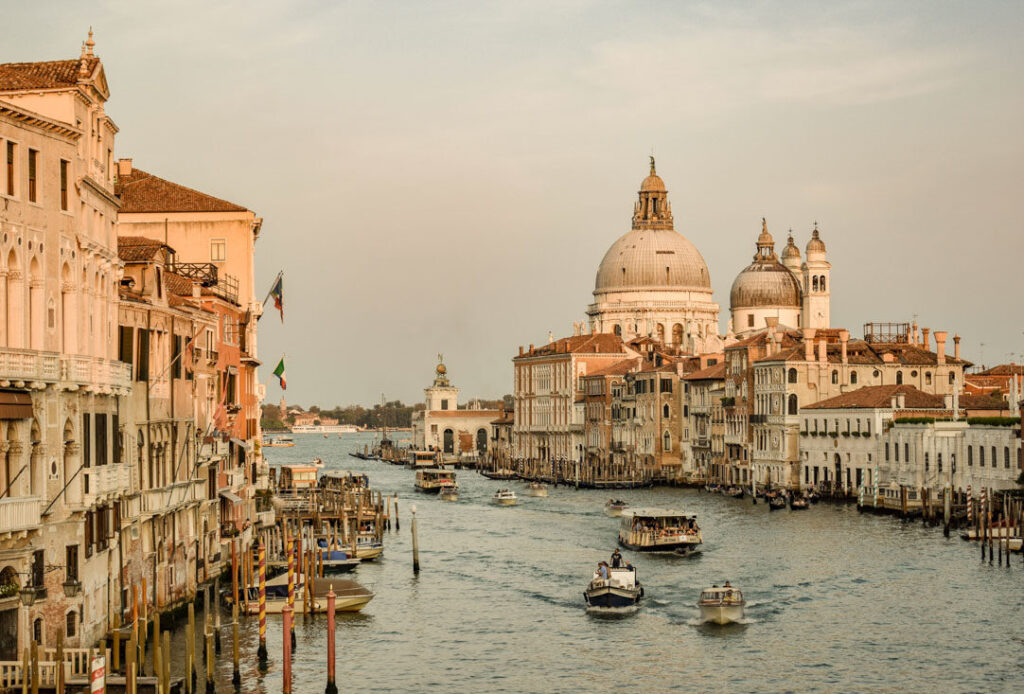
I would describe Venice as: so beautiful, it’s unreal. And can you really blame crowds for flocking to something like that? Try to knock out all the main sights at less-crowded hours. Then spend the middle of the day exploring the rest of the city, where it’s much, much less crowded, but just as beautiful. Do that, and you might just end up liking it!
How to Get to Venice from Florence
Take the train from Firenze S. M. Novella to Venezia S. Lucia. For a direct, 2.5 hour fast train, expect to pay €26 if purchased a month in advance, but €59 if purchased the day before. If you use the slower trains, priced €26 – €33 and requiring one to two transfers, the travel time climbs to 4+ hours. So I think it’s clear which option I recommend…!
Once in Venice, you should get a vaporetto pass (unless your accommodation is right by the train). Trust me – you don’t want to be lugging bags up and down those bridges! If you are 29 years-old or under, I highly recommend buying the Rolling Venice Pass. It costs €6, but in order to buy it, you need to also purchase (at least) an unlimited three-day vaporetto pass, which is €27. With the pass, you also get discounts on many attractions, like a €12 – €15 discount off of your entry into the Doge’s Palace! A one-day transport pass alone costs €25, and a two-day pass costs €35, so you can see that getting the Rolling Pass quickly pays for itself. You can purchase these passes online or in person once in Venice.
What to Do in Venice (Two Days)
Venice is actually rather small and easy to walk compared to Rome or Florence (well….minus the stairs on the bridges!). So you shouldn’t have much trouble “seeing everything” with two days in Venice. You’ll even be able to fit in a half-day trip to the Instagram-famous island of Burano, getting further use of that vaporetto pass I recommended above. If you want a more detailed walkthrough (plus photographs of each stop), you can skim through my guide on [the best things to do in Venice].
Day One: Central Venice
- Piazza San Marco: This is Venice’s main square and where a lot of the city’s (tourist) action is. First off, there’s the Basilica San Marco. It’s €3 to enter (shoulders and knees should be covered!), but there can be a very long line most hours of the day during high and shoulder season, so be careful what time you go. If you’d rather not risk it, you can book your time slot online during for an additional €3 more. Large bags are not allowed inside the basilica, but there is luggage storage nearby that the basilica will tell you to use. Just across the basilica is the Campanile (the bell tower). You can take the elevator up it for €10 if purchasing in person, or pay a €2 booking fee to reserve online in advance and skip the line (it’s the same website as for the basilica booking). There’s also the Doge’s Palace, just to the side of the basilica. Entry is €25 if booked over 30 days prior (or €30 otherwise), but only €13 with the 29-year-old Venice Rolling Card I mentioned above. You can check out the official site for more deets.
- Bridge of Sighs: Walk around the Doge’s Palace, making a left turn around the corner along the water. From the middle of the first bridge you get to, you’ll spot the famous Bridge of Sighs on your left. It’s named so because it connects the prisons to the palace, and prisoners apparently sighed while taking one last look over Venice as they walked through the bridge to their dismal new home.
- Rialto Bridge: If you haven’t figured it out by now, Venice has a lot of cool bridges! This is the most famous one, so it is also the most crowded.
- Accademia Bridge: Though not really listed as an attraction, this bridge was my favorite bridge, because it has such an amazing view.
Day Two: Colorful Burano
- Take a half-day trip to Burano and Murano: I wrote a super-detailed guide on exactly how to visit the islands from Venice, plus what each island is all about. This should take up the first half of your day.
- Fondaco dei Tedeschi: This shopping center has free rooftop views of Venice, but you need to book in advance. It’s located right at the edge of the Rialto Bridge on Calle del Fontego.
- The Grand Canal: You can’t visit Venice without taking it in from the water! The obvious way to float around Venice is on a gondola. This will set you back €80 per gondola (six people max) in the daytime, or €100 sunset and later. Prices are fixed, so check current gondola prices, and don’t let anyone overcharge you. If you are traveling on a budget, like I was, you can alternatively just ride the vaporetto between the San Marco stop and the train station stop. This will be “free,” since the vaporetto pass necessary for the Burano and Murano half-day trip is still valid!
Where to Stay in Venice
Where to Stay in Venice
- Hotel Abbazia: Mid-range option, just 3-minutes walk from the train station (no bridges to cross with luggage).
- Hotel Becher: Higher-end option with rooms ranging from single to family suites, many of which offer balconies overlooking the canal, with drapes around beds (to ward off Venice’s summer mosquitos), and a delicious breakfast.
What to Eat in Venice
These are some Italian favorites to try that come right from either Venice itself or the Veneto region.
- Tiramisu: This beloved Italian dessert is not from Venice itself, but rather from the nearby city of Treviso to its north. Nevertheless, anywhere in the region of Veneto is a pretty “authentic” place to try this yummy sweet treat.
- Risotto al nero di seppia: Some may find the black color fascinating, while others may find it unappetizing. But in any case, squid ink risotto is a must try while in Venice!
- Aperol Spritz: I’m sure you’ll spot this bright orange drink all throughout your 10 day Italy vacation. But this cocktail made from prosecco wine, Aperol, and soda water was actually invented in the Veneto region, so where better to enjoy it?
- Belini: Yet another famous Italian cocktail invented in Veneto – but this time from the exact city of Venice itself. Actually, you can enjoy it right in the very bar where it was invented, Harry’s Bar, in San Marco Square. (But I must say that this is a rather pricey way to have it if you sit down at one of the tables there!) This cocktail is made with Prosecco wine and peach purée or nectar.
- NOT PIZZA: If you are on the lookout for an “authentic” Italian pizza, Venice is not really the place to have it. Like I said above when explaining where you should try authentic pizza (Naples), pizza as it was first invented should be made in a wood burning oven. And Venice doesn’t have any! Venice is built out of wood, and apparently wood burning ovens were banned after a bad fire in the past. So if you fancy a pizza while in Venice, that’s totally fine (it’s your vacation, after all!). But know that it’s very far from “authentic” pizza!
How to Get Out of Venice
Alas, your epic ten day Italy itinerary has come to an end! You’ll need to get out of Venice. Venice’s international airport is Venice Marco Polo Airport (VCE). There are a few ways you can get from Venice’s city center to VCE.
- Option 1: By water bus. From any of Venice’s Alilaguna water bus stops at San Marco, Rialto, Fondamenta Nuove, or Guglie, you can hop on the water bus for €15. The journey takes up to 1.25 hours. Purchase tickets onboard the water bus or online. Private water bus rides are also an option.
- Option 2: By bus. From the Venice Piazzale Roma ATVO bus stop, ride the bus for €10. This ride takes 25 minutes. You can purchase tickets at the ATVO ticket office in Piazzale Roma, from the automated ticket machine outside that ticket office, or online.
- Option 3: By taxi. The fare for this 30 minute ride from Venice Piazzale Roma is €40. Make sure you get into an official taxi. They should accept payment via card, and you can double check this as well as fare before getting in. You can also purchase online in advance (select “Town > Venice (P.le Roma)” for Venice city center).
Adjustments to this Italy Itinerary for 10 Days
- Starting in Venice instead of the Amalfi Coast: You can totally do this ten day Italy itinerary in reverse order. However, when you get to Florence and head to the Amalfi Coast, keep the Amalfi Coast portion in the same order. That is, still start at Amalfi (or your base town of choice) and end in Capri. Then, head from Capri to Rome to end the trip.
- Squeezing in Pompeii: If you are into Roman history, you might want to squeeze in a visit to Pompeii between the Amalfi Coast and Rome. If you are based in Sorrento, this is pretty easy to DIY by simply stopping at Pompeii on the train between Sorrento and Naples and leaving your bags in the luggage hold offered at the site. I provide a lot more detail about this in my [two week Italy itinerary] in the section on how to get to Pompeii from Rome and to Sorrento from Pompeii. But if you are based in Amalfi or Positano, then you would realistically need to get a private transfer like this one from your hotel to Naples (or even Rome) with a few-hour stop in Pompeii included in the journey. If you are following this itinerary in reverse (first check out the previous bullet point), I recommend stopping in Pompeii between Florence and the Amalfi Coast instead.
- Flying in or out of Rome instead of Naples: If you find cheaper or more convenient flights through Rome instead of through Naples, then you can definitely use Rome’s airport. To get an idea of how you can switch the days in this itinerary around to fit that, I’d recommend you check out my two week Italy itinerary, which starts in Rome before heading to the Amalfi Coast.
- Stopping in Naples for pizza: As you may know, Naples is the birthplace of pizza. And it is a necessary transfer point between Rome and the Amalfi Coast. So if tasting pizza here is on your travel bucket list, you can consider stopping at Naples for a couple hours. To do that, store your bags in luggage storage at or near Napoli Centrale station before heading out in search of your perfect pie. Then, head back, pick up your bags, and hop on the fast train to Rome.
- Visiting Cinque Terre, Pisa, and Milan instead of Amalfi Coast: Especially if you are visiting in winter, you may prefer to spend your ten days in Italy in places a little less seasonal than the Amalfi Coast. In that case, I recommend you follow my other ten day itinerary instead. That allows you to visit the Amalfi Coast on a separate return trip to Italy. Keep in mind that Cinque Terre is seasonal as well, but it doesn’t require reliance on ferries like the Amalfi Coast does
- Squeezing Cinque Terre into this itinerary: I believe a minimum of two days in Cinque Terre is ideal. But you can technically visit Cinque Terre on a day trip from Florence if you have an extra day to spare. This is a valid option if one day for Cinque Terre is all you’ve got, or if you prefer to not move hotels one more time.
Any Questions on These 10 Days in Italy?
Phew! I know that was a TON of information we just got through. If you felt anything was unclear, feel free to drop me a comment down below for clarification. Yes, I do actually respond! And if you’re planning your own ten day itinerary for Italy soon and want some personalized advice, feel free to book a call with me to discuss your personal questions. I love helping people plan their trips!
Save this Italy 10 Day Itinerary on Pinterest
HI
me and my husband are looking at this for June2027. We are thinking of the 10 day itinerary but ending up southern Italy to tag on a 4-5 day Beach holiday; any suggestions please?
Hi Karen,
By southern Italy, do you mean even further south than Amalfi Coast? If so, you can always just tack a domestic flight onto the end of this itinerary to get you further south, for example Sicily or Puglia. Then, you can fly home from there if you find good flights (Palermo and Catania in Sicily might have some) or add another domestic fight to get to a better departure flight city.
Hope those ideas help!
– Em
Hello! My husband, my grandson and I plan to visit Italy in June. We will have approximately 10 days. I may be able to increase a few days. Our situation is that we need to fly in and out of the same airport, as we are using travel reward passes. What is the best way to do this? This is a graduation present to our grandson.
Hi Kim,
What a lovely graduation gift that will be!
I’d suggest flying in and out of Rome. You can follow my two week Italy itinerary but skip Cinque Terre/Pisa and Milan. Then, after Venice, take the fast/direct train back to Rome on your last night in Italy for the flight. So Rome > Amalfi Coast > Florence > Venice > Rome. If you can squeeze one more day for the extra train journey and relaxing in Rome before the flight home, this would be best. Otherwise, you can remove one day from whichever bit of the itinerary interests you least. Perhaps skipping Capri, as that would save some logistical difficulty if following how I order the two week itinerary.
You could also do this 10 day itinerary and then come back to Naples after Venice for the final night of the trip, again by either removing one day from this itinerary or tacking on an extra one to devote to travel. It will be about 6 hours on the direct train vs about 4 hours to Rome, which is why I suggested Rome initially. But really whatever works best for your dates and travel rewards!
Hope that helps!
– Em
Thank you for this itinerary! We have a cruise out of Ravenna and we’re trying to figure out if we split this into before and after cruise or should we do this all before the cruise? Must do Venice, Florence, Pisa, Rome, Pompeii, and Amalfi Coast. 1st time in Italy so want to see all the best sites and like to see where the locals go. Thank you!
Hi Kathleen,
It’s really up to you! But it’d probably be simplest to do it all before or all after. You could do the entire itinerary + Pisa from Florence, end in Venice, and then head to Ravenna from Venice via train (1 transfer). Or the exact opposite.
To split it, you could start in Venice, do the cruise, then head to Florence (1 transfer) and continue the itinerary. Or the exact reverse.
I’d probably choose based on the time of year, if it were me. I assume your cruise dates are fixed, so I’d think about whether the weeks before it or after it seem better for weather/crowds/costs.
Hope that helps!
– Em
Hey! Do you happen to have a printable itinerary e-book for this trip like you do for the “The Best of Italy: Ultimate Ten Day Italy Itinerary” trip that takes you through Rome, Florence, Venice, Cinque Terre, Pisa, and Milan? ☺️ and do you have any plans to do any itinerary for Greece or Switzerland at all? 😄😄
Also if we’re not super interested in seeing a lot of the museums and art whilst in Florence, do you think there is enough time to do a half day trip to Pisa and a full day trip to Cinque Terre, whilst still getting to experience a bit of Florence? ☺️
Thanks so much, your itnieries and blogs are going to be so helpful for planning my honeymoon!
Hi Emma,
Glad to know my itineraries have been helpful!
I don’t have an e-book for this itinerary, but someone else asked for one a while ago, so it’s on my to-do list! I’d love to do Greece itineraries in the future, but somehow I still haven’t been! And I haven’t seen enough of Switzerland yet to feel like I can suggest an itinerary.
And yes, what you said could be an option. I’d just recommend to do the Pisa day trip as early as possible in the day so you can have a proper half day in Florence to walk around it and view things from the outside. Just keep in mind that it’d be a lot of trains in a short time. Rome to Florence one day. Then Pisa and back the next day. Then Cinque Terre and back the next day. Then on to Venice the next day. If that sounds ok for you, then yes your plan is doable.
Hope that helps!
– Em
Good article. Way too many links and advertisements. It made it unreadable as I scrolled and kept hitting a pop up it would bring me way back up and I would loose my spot. Unfortunate because it looked well done I got to Rome and gave up.
Hi Sam,
Thanks for that feedback! Unfortunately they are how I am able to pay to host this content online for free for readers, so I can’t get rid of them entirely, but I will look into why there are so many and about losing one’s spot.
Have a great time in Italy!
– Em